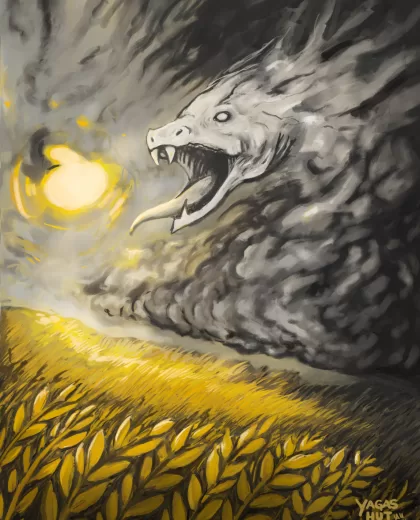


Ovinnik lives in the dark of the threshing house, where shadow and straw gather.
In Eastern Slavic folklore, he is a barn spirit tied to grain, fire, and the drying of the harvest.
He watches in silence, where a single careless moment can cost an entire harvest.
Known by several names across the East Slavic world, Ovinnik also appears as Gumennik, Podovinnik, and Ovinnushko. In many traditions, Gumennik is another name for the same spirit. In others, the two are distinguished: Ovinnik guards the threshing house, while Gumennik watches over the threshing floor, where harvested grain is prepared before being stored.
Appearance & Nature
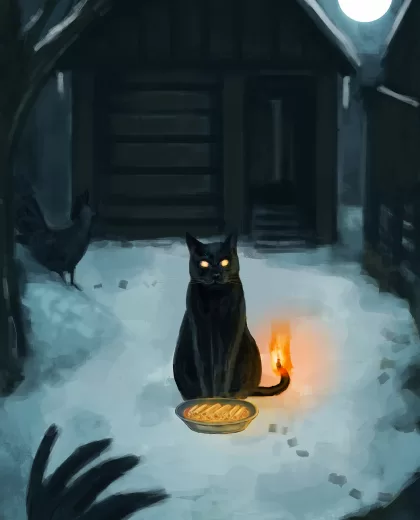
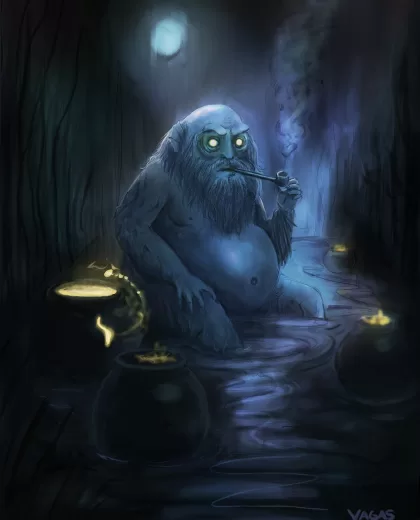
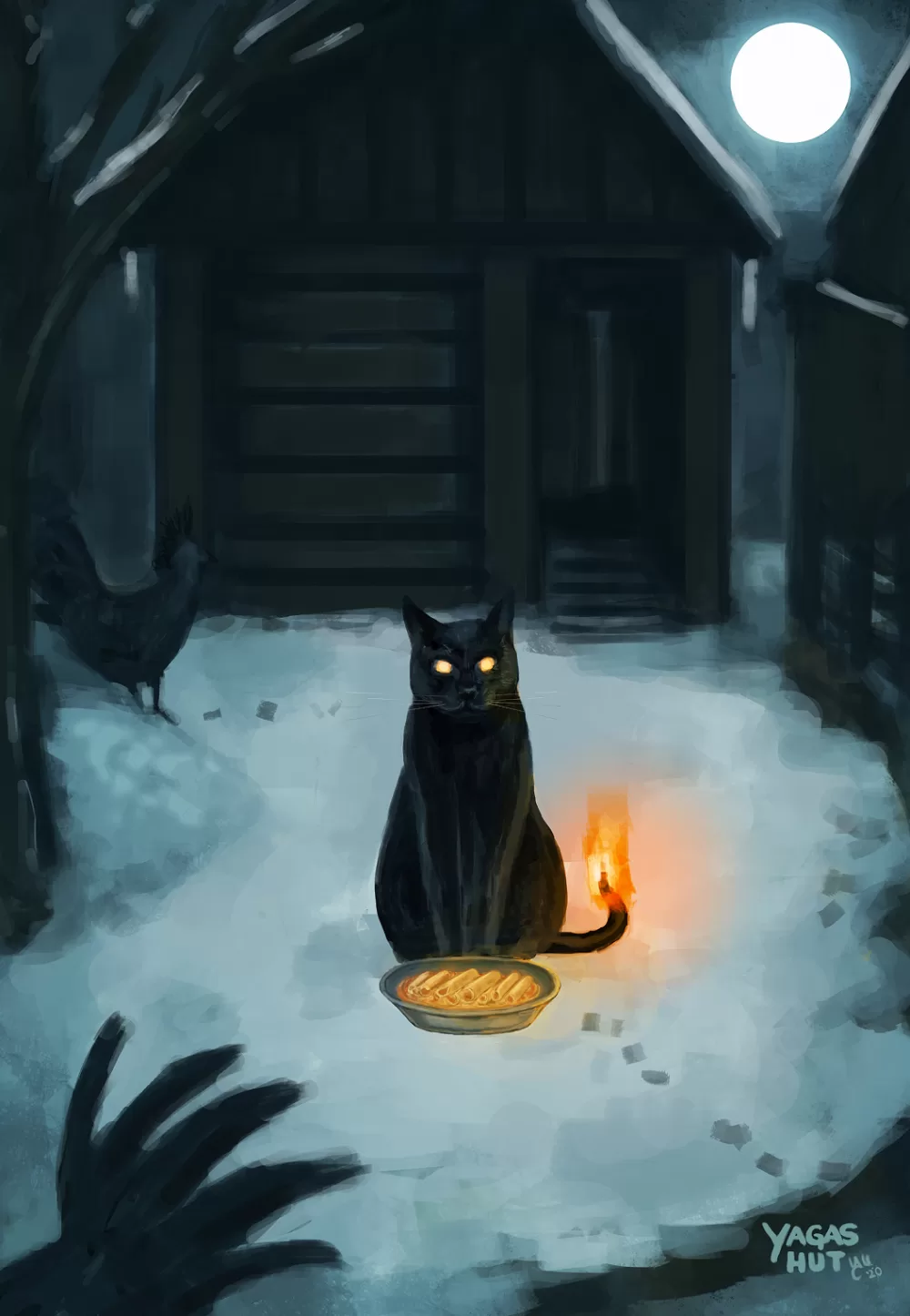
Ovinnik often takes the form of a sleek black cat with eyes that burn like fire, yellow at their core and ringed with a crimson glow. He may also appear as a small humanoid figure blackened by smoke and soot.
Some stories say he could bark like a dog, while his claws carried sparks.
He belongs equally to the threshing house and its furnace, walking among stacks of grain and ruling the flames that preserve or destroy the harvest.
When the barn smells of smoke, Ovinnik stands behind the door.

Guardian or Arsonist
Ovinnik can protect the barn and its contents if offered his due. But if forgotten or insulted, he becomes destructive. He sets fire to grain, burns drying floors, and turns blessing into ruin.
There were days when no fire should be lit in the ovin. To ignore the custom was to tempt Ovinnik, and many believed the threshing house would stand in ashes before morning.
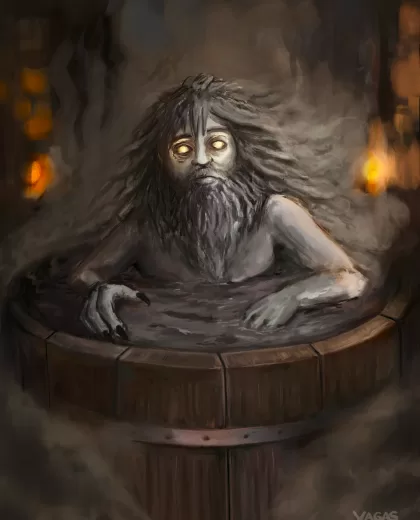
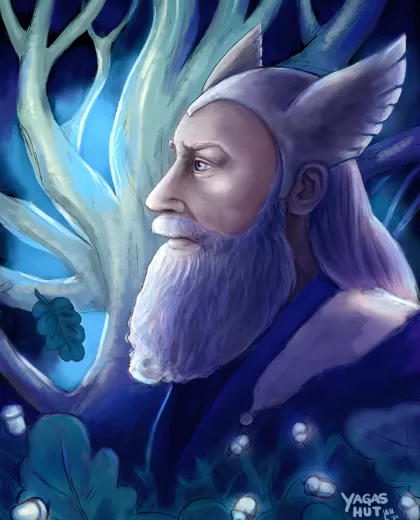
Like Bannik of the bathhouse, Kikimora of the home, and Leshy of the forest, Ovinnik belongs to the great family of Slavic domain spirits. Each is bound to a place, and each demands respect in its own way.
Offerings kept him peaceful. Blini, traditional Slavic pancakes, and bowls of kasha were among the gifts left for him.
The rooster was valued above all. Its red comb and call at dawn made it a fitting offering for a spirit so closely tied to fire.
Feed him pancakes or sacrifice a rooster, and save your barns from his wrath.

New Year’s Touch
On New Year’s Eve, it was said that Ovinnik’s touch could reveal the year ahead.
Warm is blessing. Cold is misfortune.
The Spirit of the Barn
A full barn was never taken for granted. It depended on careful work, remembered customs, and respect for the place that kept the harvest safe through winter.
The flames that dried the grain could also destroy it. Ovinnik was not cruel by nature, but unforgiving toward carelessness. His protection had to be earned again through careful work and remembered rituals.
Prosperity endures only with care. What guards you today may burn you tomorrow if forgotten.