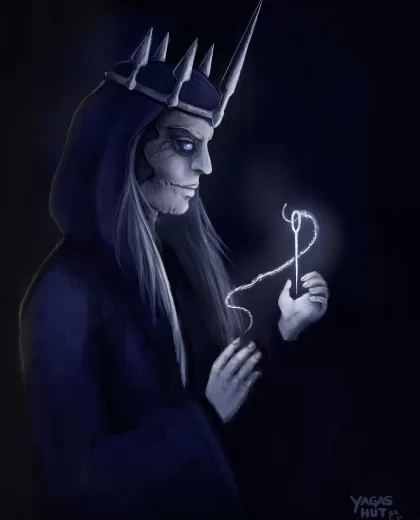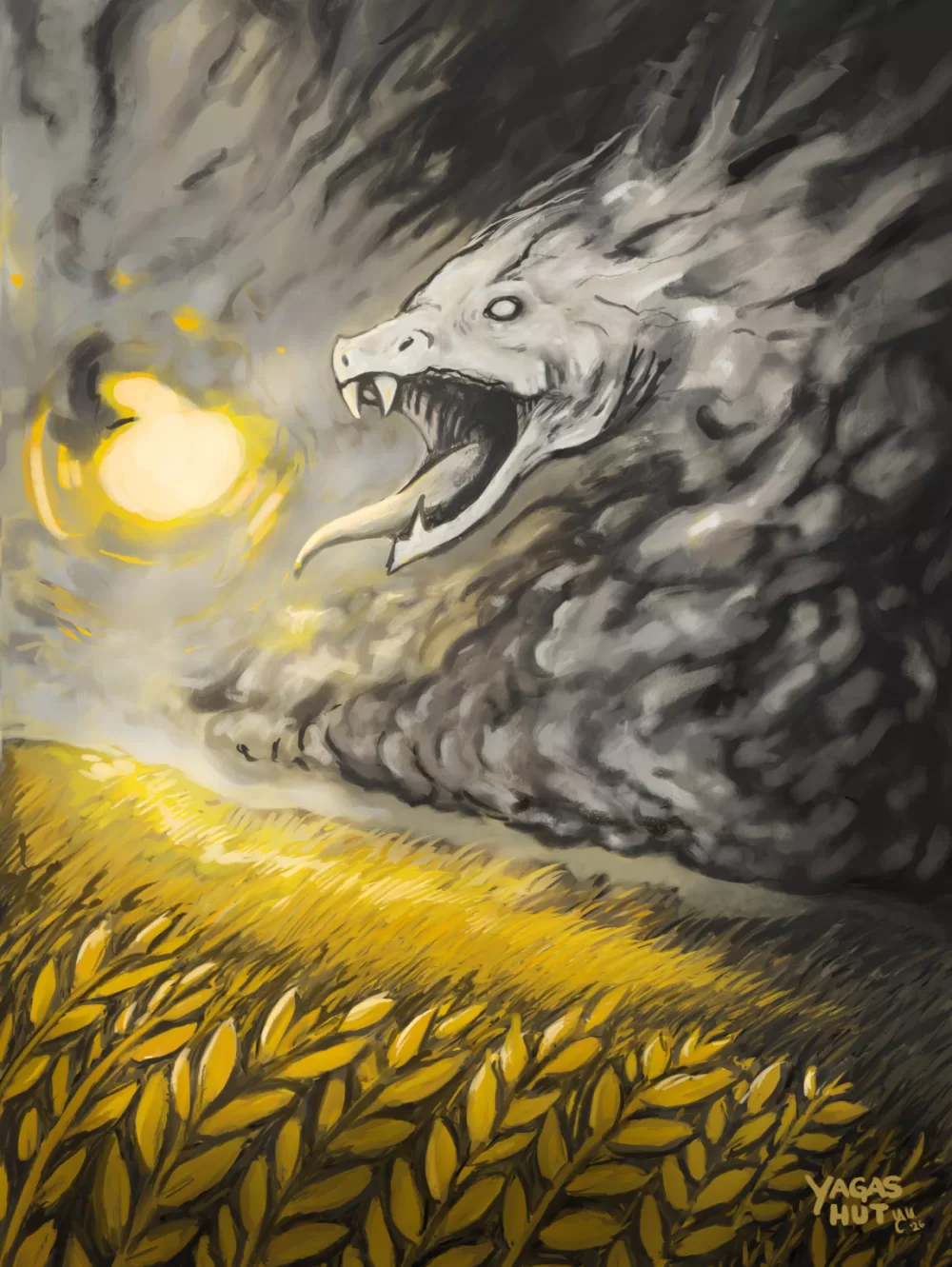

Ala, also known as Hala, comes when the sky turns black. In Serbian, Bulgarian and Macedonian folklore, she is a being of storm, violent wind and hail.
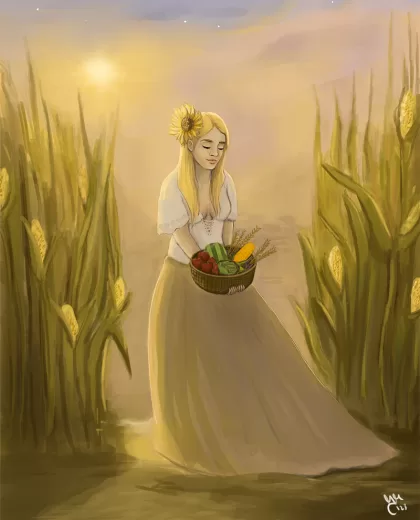
She moves with the clouds above fields, vineyards and orchards, destroying crops or carrying their abundance away with her.
For those who depended upon the harvest, there were few things more frightening. Months of work could disappear in a single afternoon. Wheat could be beaten to the ground, and fruit could be scattered beneath the trees.
When such clouds appeared above the fields, people did not always believe they were watching weather alone. They believed an Ala was coming.
The field may belong to the farmer, but the sky above does not.
The Shape Inside the Storm
There is no single description of the Ala. Her appearance changes from one region and story to another.
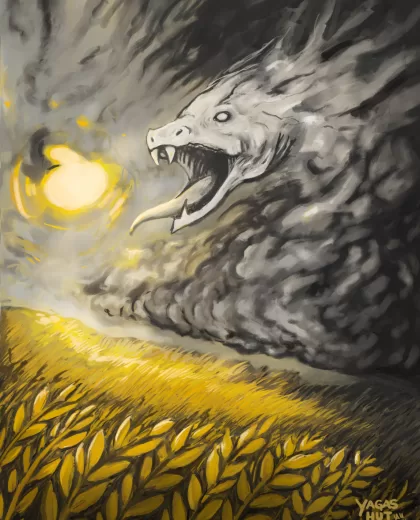
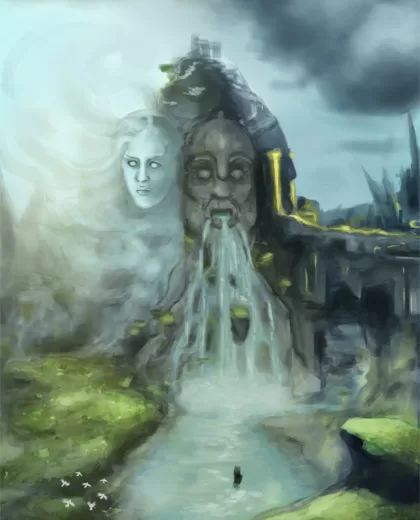
In some traditions she is barely a creature at all. She is a black and terrible wind, rushing across the earth in a whirlwind that turns like a drill. Those caught inside it were said to lose their minds.
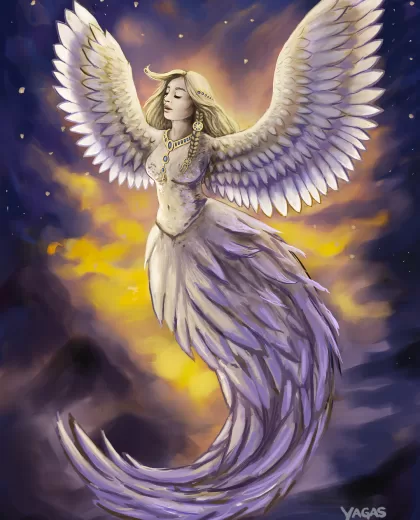
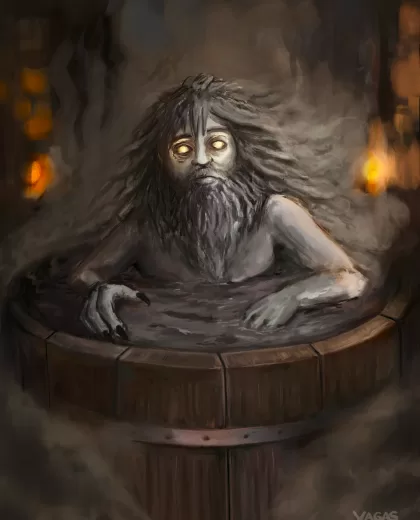
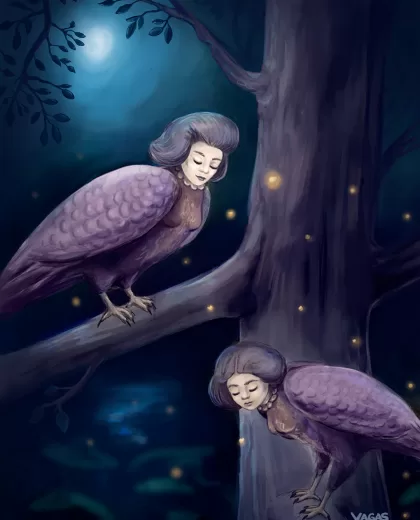
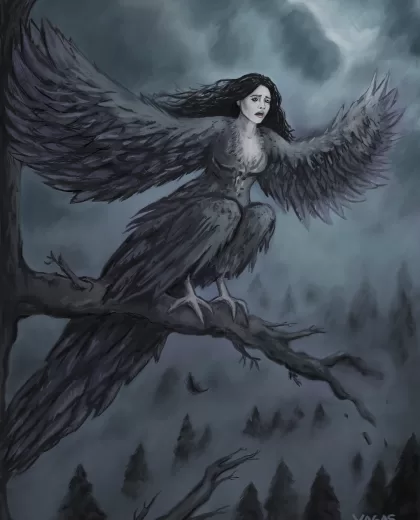
Ala can take the form of a serpent, or may appear as ravens, other animals, or beings that shift between human and monstrous forms. Her shape is as changeable as the storm itself.
Ala and the Land
In some beliefs, she could take the abundance of the land with her, but she could also protect it. On Mount Kopaonik, a local Ala was said to guard the fertility of her territory against others of her kind.
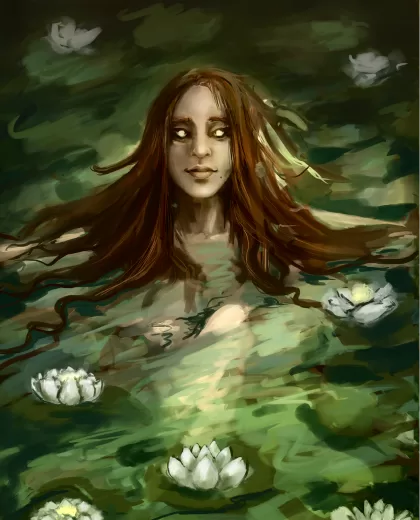
One story tells of an Ala living in a lake. After she was killed, the surrounding land was said never to yield wheat as richly again.
One land's destroyer could be another land's guardian.
When the Zmey Rises
An Ala crossing the sky did not always travel unchallenged.
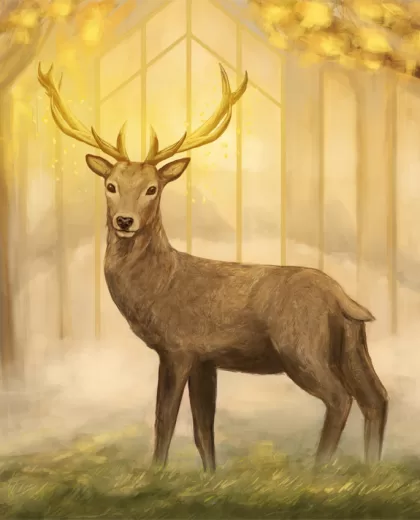
Among her enemies was the Zmey, remembered in some South Slavic traditions as a defender of the land against destructive storm beings. Thunder could be understood as the sound of their battle, while lightning was the weapon that struck through the clouds.
In the Upper Pčinja region, unusually fertile patches of a field were sometimes explained as places where a Zmey had struck an Ala, causing her to drop some of the crops she had carried away from elsewhere.
For the people below, it was conflict unfolding above the fields on which their survival depended.
Ala Eats the Sun and the Moon
Ala was believed to devour the Sun, but also the Moon. Not only during storms but also during eclipses, Ale were thought to bite into the heavenly bodies and slowly devour them.
People believed the Ale were trying to destroy the Moon. If they succeeded, the Sun would die from sorrow, and darkness would cover the world.
Other traditions remembered the marks upon the Moon as wounds left by the Ala's teeth.
To the people watching below, an eclipse looked like the sky itself being eaten.
Even the Moon carried the marks of her hunger.

Turning the Storm Away
When hail clouds appeared on the horizon, people did not always wait helplessly for them to arrive.
Objects from the household could be carried outside as the clouds approached. Bread and salt might be placed upon a table with a knife and an axe, the axe blade turned upward toward the sky.
Older beliefs did not disappear with the arrival of Christianity. In later folk tradition, church bells were rung as dangerous storm clouds approached, their sound believed to help drive the threat away. Christian figures also entered older stories of the storm, just as St. Elijah came to appear among the supernatural defenders who fought the Ala.

The House of Ala
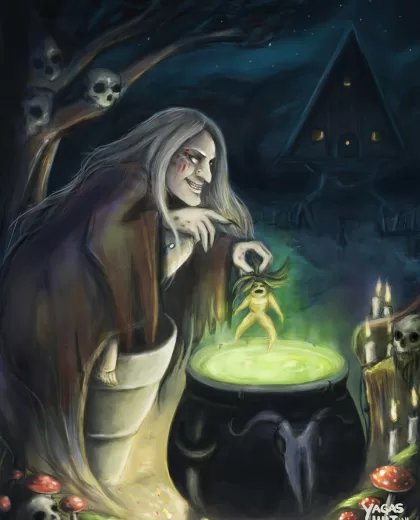
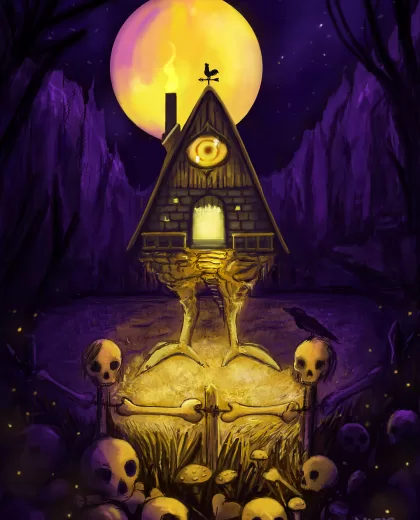
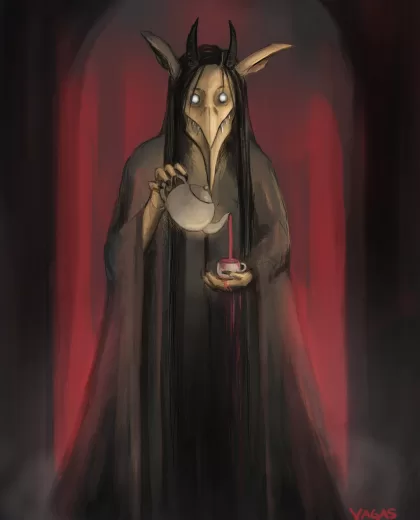
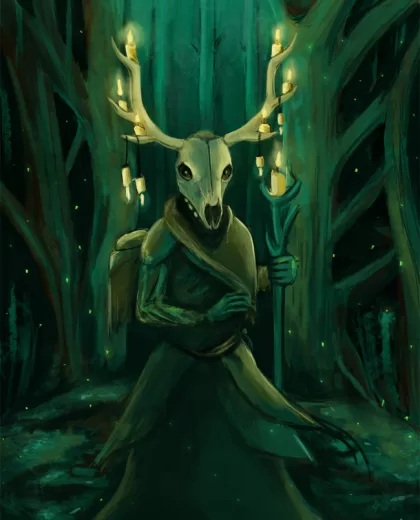
Yet not every story about the Ala begins beneath a storm. Serbian folk tales also lead travellers to the house of an Ala, a place where the rules of the human world no longer quite apply.
Some visitors are rewarded for showing respect, while others meet a darker fate. One tale tells of a woman invited into the home of an Ala who had become godmother to her child. Inside, she encounters impossible and disturbing things, including the Ala removing her own head and replacing it with the head of a horse. When the woman later admits what she has seen, the Ala devours both her and the child.
The tales of the Ala resemble East Slavic stories of Baba Yaga. In both, a human enters a place belonging to another world, where ordinary rules no longer apply.
Some doors may be opened. What waits behind them should not always be spoken of.
The Ala Beneath the Skin
Other stories bring the Ala even closer. In one tale, a man searching for the creature destroying his vineyard finds her inside a thin man in a distant village.
He feeds on milk and bread in three colours: black, green, and white. Each is made from grain stolen at a different stage of its growth: when the Ala comes over the fields as morning mist, while the grain is still green, and once it has fully ripened.
After the Hail
The old stories placed something inside those clouds. It could be a serpent, a black wind, a creature with an enormous mouth, or something whose true shape no one could agree upon. It might steal the harvest, fight Zmey above the fields, bite into the Moon, or carry the abundance of one village into another.
Its shape mattered less than its arrival.
Even now there are still moments when daylight disappears, the wind begins to turn, and everything we have carefully built or grown suddenly depends upon something beyond our control.
We build as though nothing will take it away, knowing not everything is ours to keep.