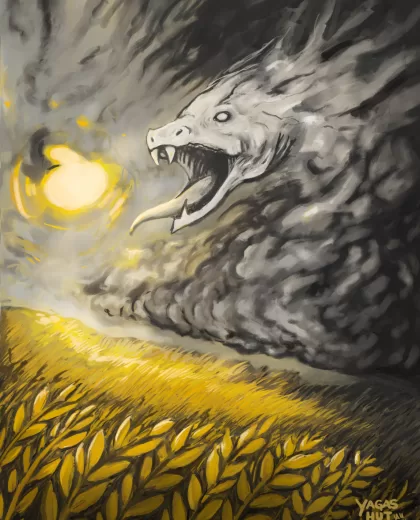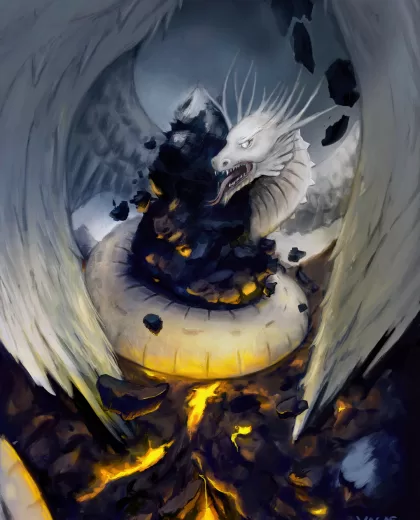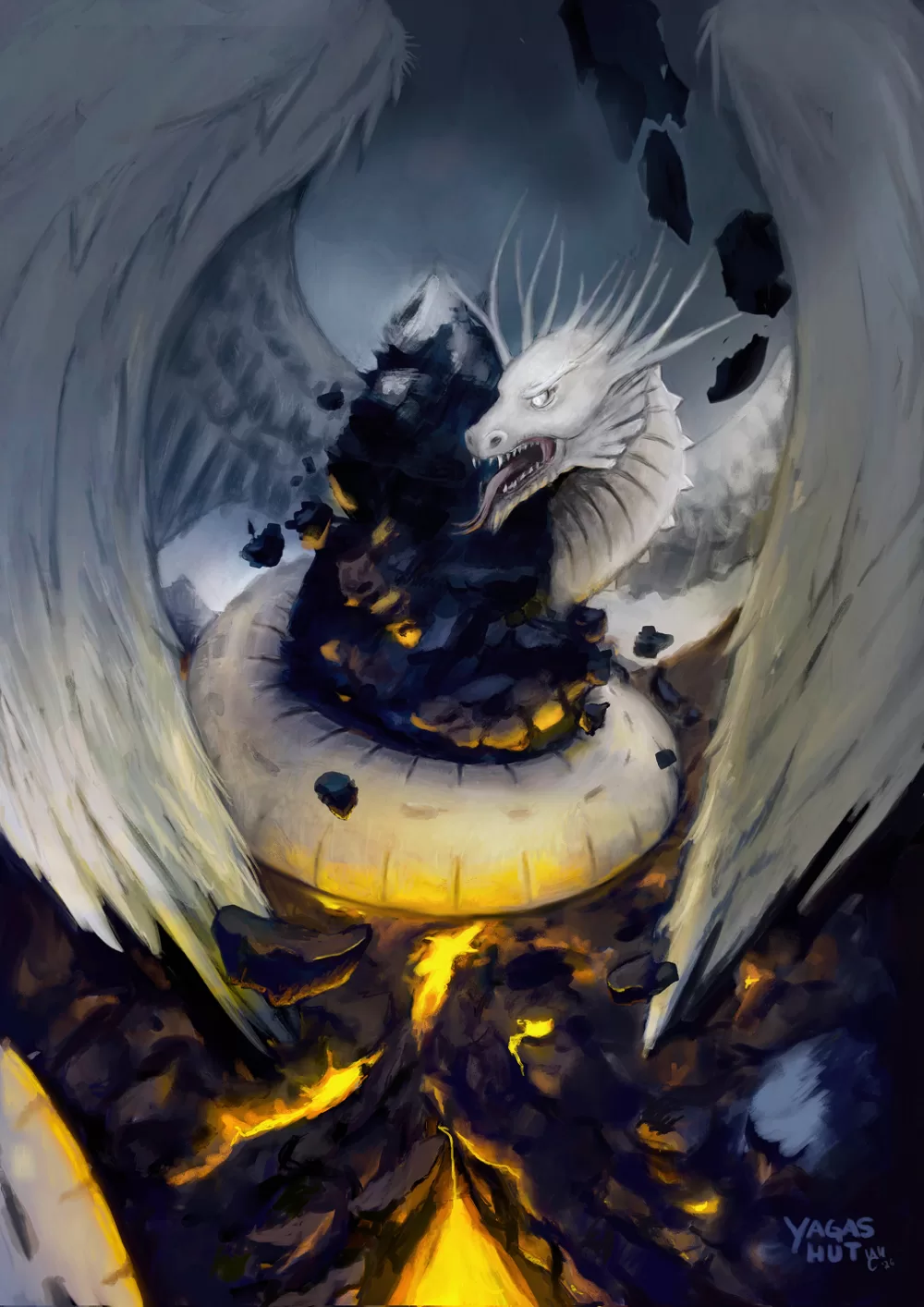

Zmey is a serpent-like dragon of Slavic folklore, a being that moves between sky and earth, never fully belonging to either.
Across the Slavic world, dragons appear under many different names. They are known as Zmiy among the East Slavs, Smok in Poland, Zmaj across much of the South Slavic world, Aždaja in later South Slavic traditions, and Lintvern in parts of Slovenia.
Though these beings are not identical, they often share serpent-like forms, supernatural strength, and a place within the same wider dragon tradition.
Some guard hidden treasures, others arrive with storms, fire, or destruction. Some protect the land, while others threaten it. There is no single Zmey. The name does not point to one creature with one fixed nature, but to dragons and serpent-like beings remembered differently across regions.
Many Shapes, Many Stories
Some Slavic dragons take the form of winged serpents descending with storms. Others dwell in caves, beneath mountains, or near deep water, guarding wealth or places people learned to avoid. In certain traditions, dragons can even take human shape, walking among people, forming bonds, or bringing misfortune into the household.
In some regions they are tied closely to fire and destruction. Elsewhere they belong to water, storms, mountains, and the deep forces beneath the earth. These differences belong to the folklore itself. The dragon changed with the landscape, the danger, and the people telling the story.
The Dragon Beneath Zaplana
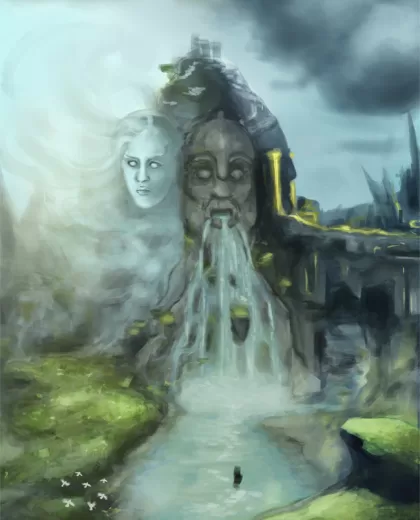
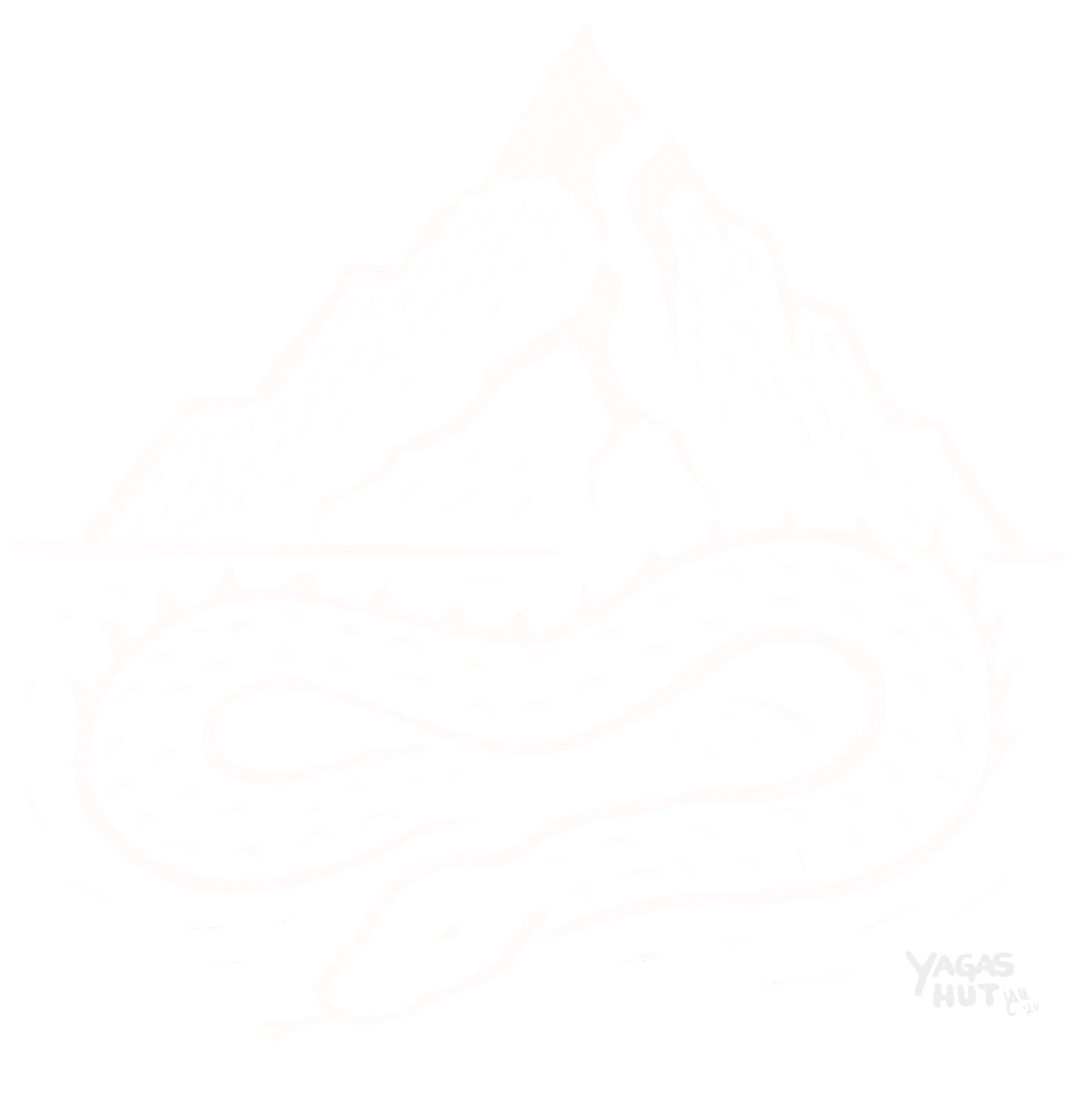
This depiction draws from a specific Slovenian tradition, a dragon known as a lintvern, believed to dwell beneath the earth near Zaplana.
“There, where the dragon lies, is a spring. When too much water gathers for the dragon, he pours it away. This goes on and repeats over and over again. As long as the dragon is under the ground he will live, even if it is for thousands of years. But when he comes from earth into the air, then everything under his feet will cave in and break until it kills him.”
68 Valvasor 1689 IV: XXXI; Grafenauer 1956: 332.
In this telling, the lintvern is strangely bound to the land above it. While it remains underground, the spring continues its cycle and the mountain holds. Its emergence is what brings destruction.
If it rises, that balance is broken.
The ground collapses.
The earth fractures.
What was held beneath begins to surface.
When the Lintvern Rises
As long as the lintvern remains beneath the mountain, the land above endures. But the old account leaves no doubt about what would happen if it rose. The ground beneath its feet would cave in and break until the creature itself was destroyed.
The dragon does not rise to conquer the mountain. Its movement is enough. What has remained hidden for centuries presses upward, and the land can no longer hold its shape.
The ground breaks beneath its rising weight, and in that rupture the dragon is destroyed as well.
Dragon, Storm & Earth
Dragons and serpents also appear in the wider Slavic imagination of storm and earth. Perun strikes from above, his thunder and lightning belonging to the ordered heights, while Veles is tied to waters, earth, and what moves unseen beneath the surface.
The lintvern of Zaplana belongs most clearly to that lower landscape: underground water, stone, pressure, and the mountain above. It may endure beneath the earth for centuries, but its survival depends upon remaining where the old tale placed it.
Other Slavic dragons belong to different worlds and different stories. Some rise into storms. Some guard treasure. Some take human shape. The lintvern beneath Zaplana is remembered for something quieter and stranger: simply remaining below is what keeps both dragon and landscape intact.
The Cycle
The old story does not end with victory over a monster. There is no hero waiting with a sword, no treasure taken from the cave. The danger lies in the moment when something that belongs beneath the earth can no longer remain there.
What rises falls. What breaks returns to the ground. And beneath the mountain, as long as the old balance holds, the dragon endures.
Zmey reminds us that nothing can exist out of balance for long.