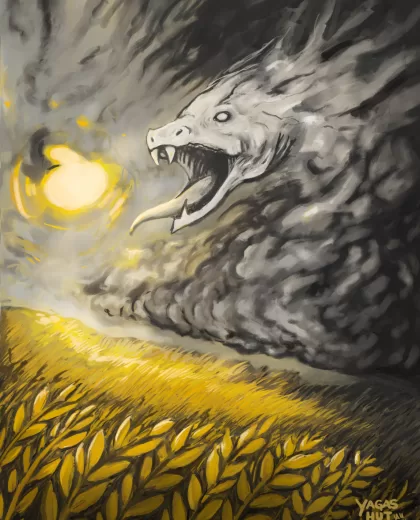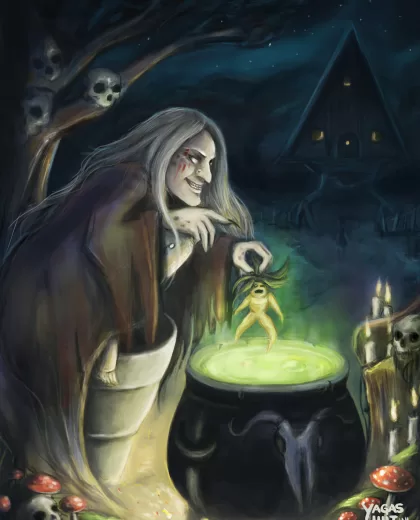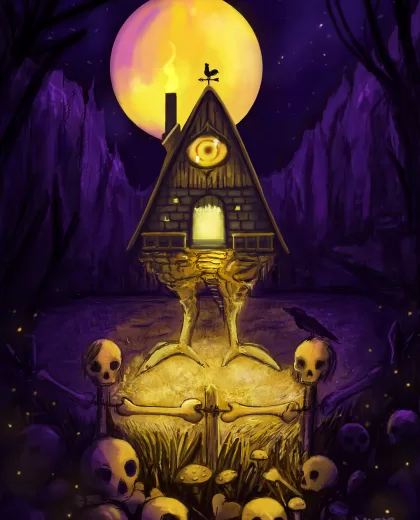


Bannik is the spirit of the bathhouse, older than the stones from which the banya was raised. The old villages believed that although men built the bathhouse, it never truly belonged to them.
Across Eastern Slavic villages, he ruled heat and steam, guarding the threshold between body and spirit. He was feared, but not avoided. The banya held the most sacred and the most perilous work of the old villages: the washing of the newborn, the dressing of the dead, and the cleansing before marriage. Where such thresholds stood, Bannik stood with them.
Appearance
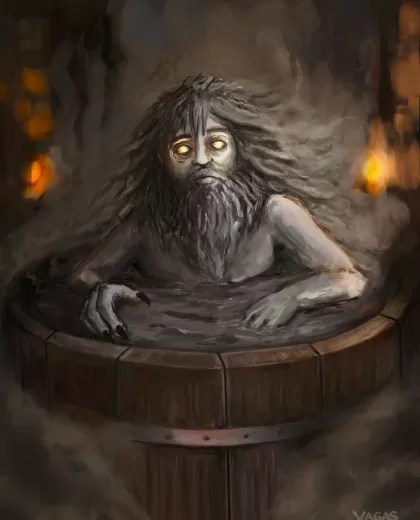
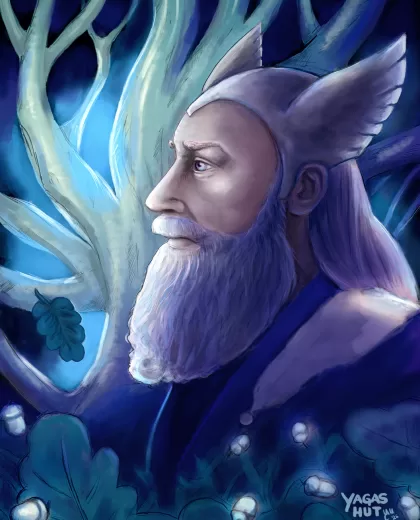
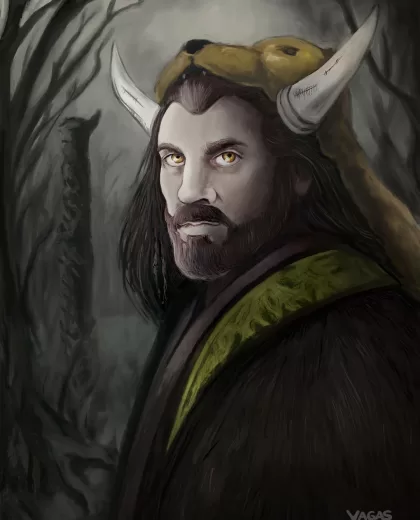
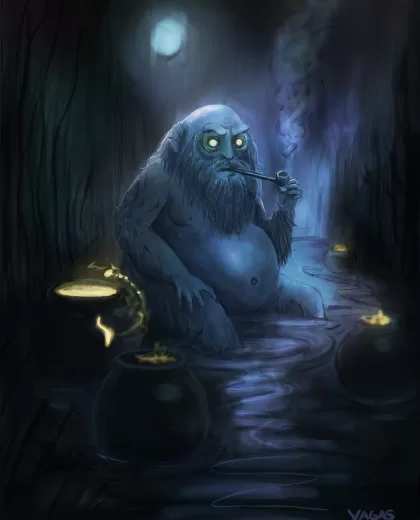
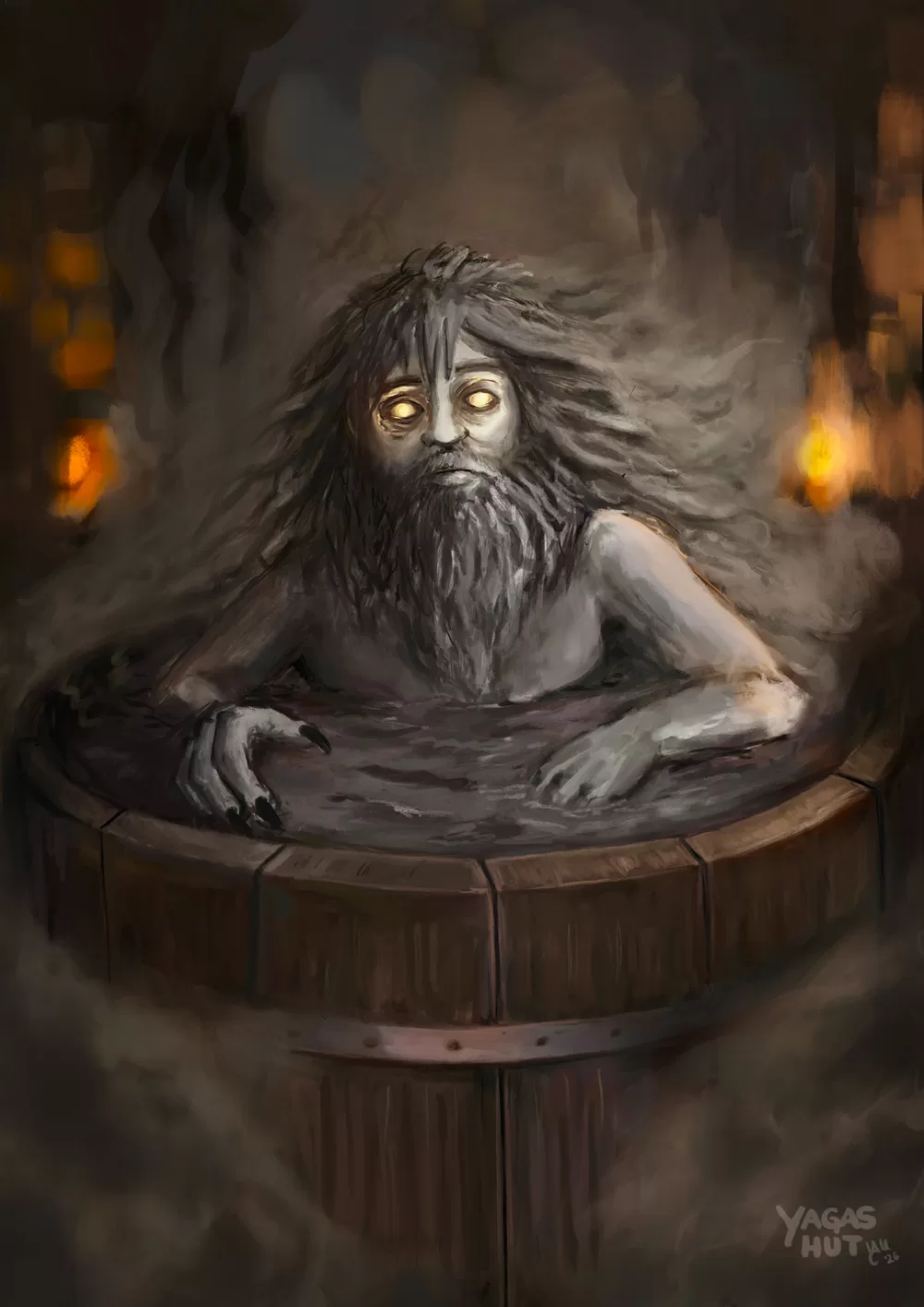
Bannik is rarely seen clearly. When glimpsed, he is described as a naked old man, his hair long and matted, his nails grown into black claws. Some remembered his body covered in coarse hair like a beast. Others claimed he was small and wizened, no larger than a child.
In many tellings, he is not seen at all, only felt in the sudden heat against the back of the neck, or heard in the hiss of water thrown on stones nobody stood beside.
If the steam bites where no one struck it, the master of the bathhouse is awake.
The Fourth Bath
The old rule of the banya was simple. The first rounds of bathing belonged to the household. The last belonged to Bannik and to the spirits who entered the steam beside him.
No one stayed once Bannik’s hour had come. Those who lingered too long risked being scalded by unseen water, suffocated in the steam, or stripped of skin by claws hidden within the dark. Some were found burned by morning. Others were found silent. Some were never found at all.
The living bathe before night settles. What comes after belongs to another master.
Bargains and Offerings
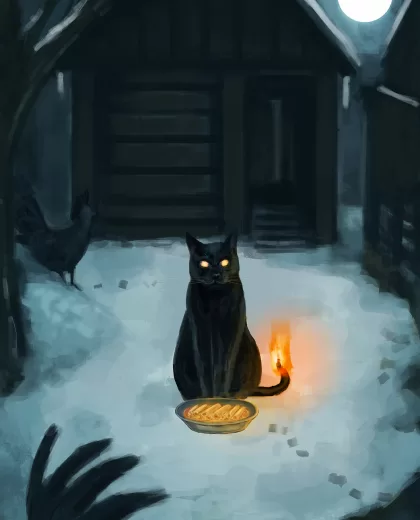
To settle a new banya, villagers once buried a black chicken beneath the threshold, offered to Bannik as the first gift of the house. Afterwards, no work began there without a small kindness: bread left on the bench, salt sprinkled by the stove, or water drawn before his hour came.
No one cursed inside the banya. No one boasted. No one turned their back on the stove.
Ovinnik kept the threshing barn to similar rules, and the old homesteads knew that a spirit appeased allowed the work to continue. A spirit forgotten was a spirit with a temper.
Bannik rarely troubled those who remembered to show respect.
Divination at Midnight
For all his danger, Bannik was also a keeper of answers. On the long winter nights around the turning of the year, young women went to the bathhouse after dark to ask him whom they would marry.
They would press a bare hand through the cracked door and wait. If the touch that answered was soft fur, the husband would be kind and the household warm. If it was a cold claw, the marriage would bring hardship. If nothing answered at all, no husband would come.
The steam speaks before fate arrives.
The Master of the Bathhouse
Bannik was never a gentle spirit. His bathhouse was a place of fire and water, birth and death, where the body was laid bare and the soul stood closest to the other world.
Fire, water, birth, and death all passed through the banya. Bannik remained where they met.
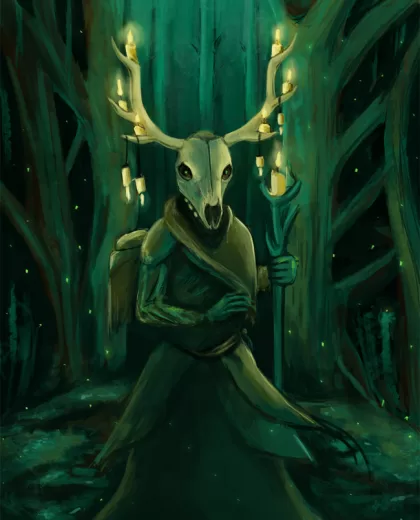
Where the wild woods answered to Leshy, the most intimate room of the household answered to Bannik. Both demanded the same thing: enter only on their terms, and leave the place as you found it.
Those who shared the bathhouse with spirits learned this: respect keeps the peace where walls alone cannot.