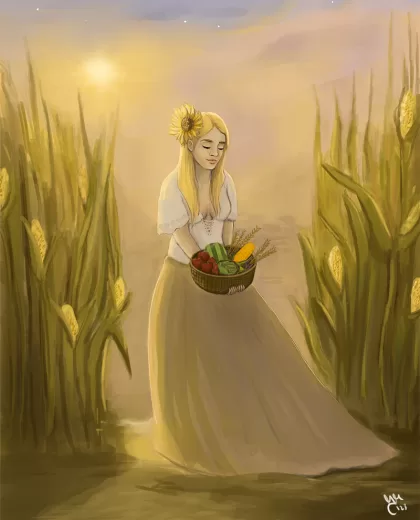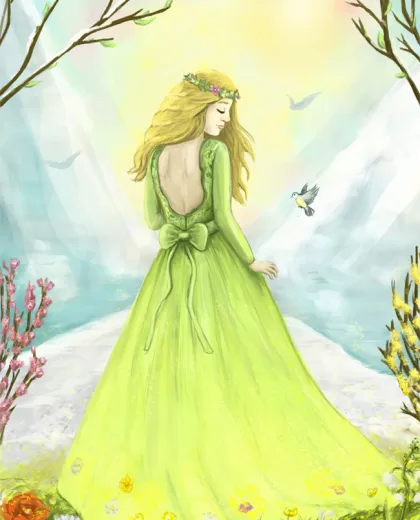


Mavka, also known as Navka or Nyavka, walks through the forests and mountains of Ukrainian folklore. She appears as a beautiful young woman, often with long loose hair and flowers woven through it. Yet the old stories remember something darker beneath her beauty.
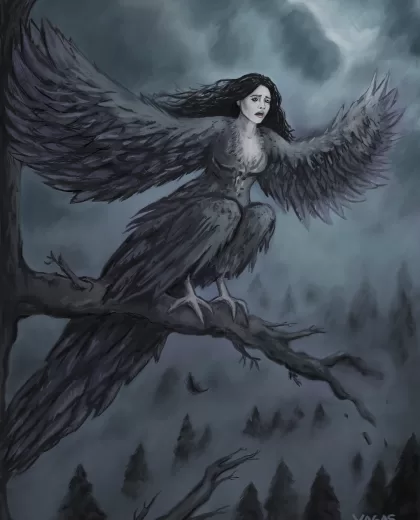
Mavkas were associated with the souls of girls who had died unnatural or premature deaths. Their very name carries this memory: nav is an old Slavic word connected with the dead.
They gather far from ordinary homes, among forests, mountain caves, and lonely shelters. In spring, when flowers return to the mountains, so do they.
Follow the flowers far enough, and you might find yourself among the dead.
The Girl Without a Back
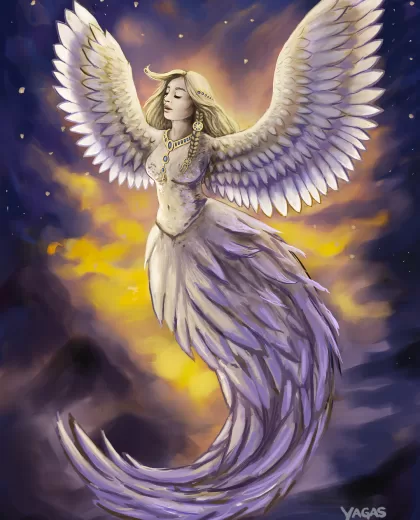
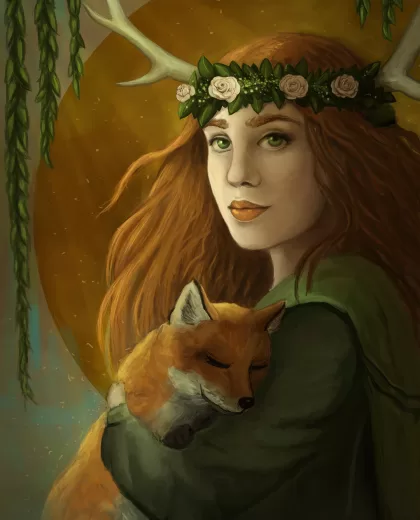
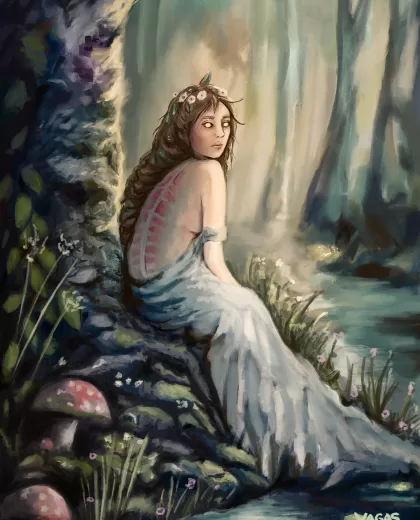
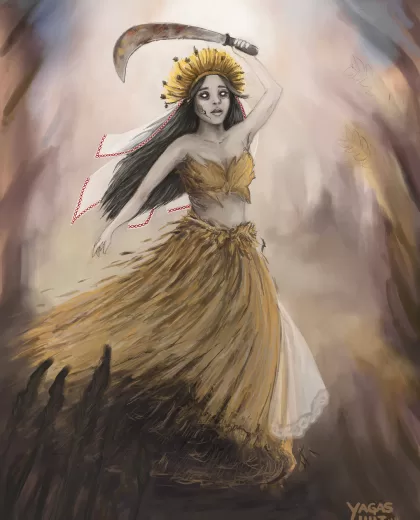
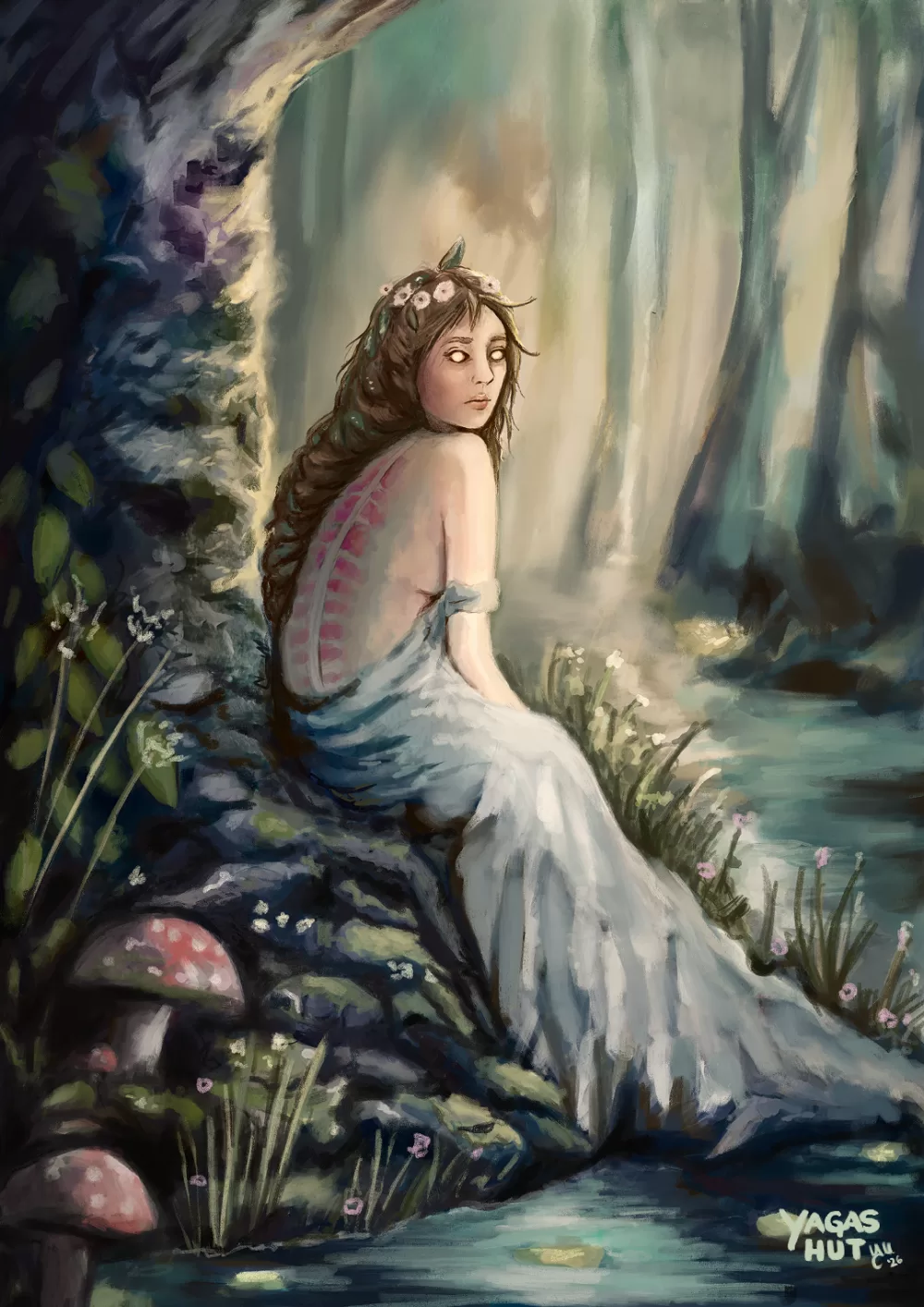
From the front, there may be little to betray her. She is young and beautiful, with long hair falling around a human face. Flowers decorate her hair, and some accounts dress her in thin cloth woven by the Mavkas themselves.
But in Hutsul tradition, the illusion ends when she turns away.
She has no ordinary human back. Her body lies open behind her, exposing what should have remained hidden beneath skin.
This detail is not found in every tradition, and some tellings distinguish the Nyavka from the Mavka by this very feature. Elsewhere, the names overlap, and the difference between Mavka and Nyavka is not always clear.
Do not trust the face until you have seen what is behind it.
Where the Mavkas Gather
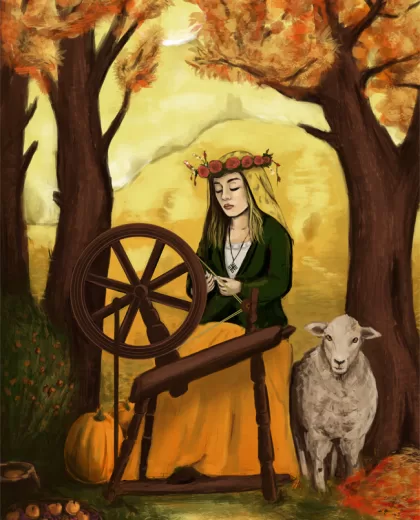
Mavkas were said to live together in forests and mountain caves, away from villages and cultivated land. Some tales place them in hidden shelters deep in the mountains, where they spun stolen flax and wove it into fine, sheer cloth.
They loved flowers. In spring they planted them across the mountains and wore them in their hair.
Not every tradition describes Mavka only as a danger. Among the Hutsuls, a people of the Ukrainian Carpathians, she could help tend livestock and protect it from wild animals, while also planting trees and sowing plants across the mountains. Her relationship with the wild was not always hostile, even when other traditions made her dangerous to people.
Young men were said to be particularly vulnerable to their charms. Mavkas danced and played, drawing their visitors closer. Come too close and you could be tickled to death.
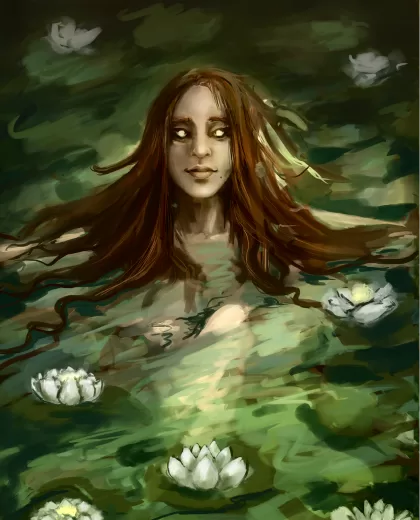
As strange as it may sound today, death by tickling was not unique to Mavka. The same motif appears in tales of Rusalkas, who also lured young men with song, dance, and beauty before their games turned deadly.
The forest already held beings who could turn a familiar path strange. The Leshy confused travellers beneath the trees. Mavka needed no shifting path. Her beautiful face was enough.
Those drawn close by a Mavka’s beauty might find her games are not meant for the living.

Flowers and the Restless Dead
Some stories preserved the belief that a restless child’s soul could be released by giving it a name.
In late spring came a time sometimes called Mavka’s Easter (Mavskyi Velykden), when Mavkas were said to gather for games and dances.
These traditions also bring Mavka close to the Rusalka. Their traditions overlap, particularly around seasonal gatherings and the restless dead, but Mavka is rooted especially in Ukrainian and Carpathian tradition.
Mavka in The Forest Song
Mavka did not remain only in folklore. In 1911, Ukrainian writer Lesya Ukrainka made her the central figure of The Forest Song (Lisova pisnia), one of the best-known works of Ukrainian literature inspired by folklore.
Ukrainka’s Mavka is not simply the dangerous spirit of older tales. She becomes a more complex forest figure, caught between the wild world and the human one. The play helped carry Mavka from traditional folklore into modern Ukrainian culture.
When She Turns Away
Behind Mavka’s flowers and dancing are tales of girls who died too soon and became part of the restless dead.
Spring gives Mavka a strange place in the landscape. Everything around her is returning to life. Flowers grow again, the mountains turn green, and the forests fill with new growth. Yet Mavka remains a reminder of the finality of death.
Spring brings the flowers back each year. Some things it can never bring back.