

Lada is remembered across many Slavic lands as a figure associated with love, beauty, harmony, and abundance. Her name is closely linked with late spring and summer, when flowers bloom, fields ripen, and communities gather to celebrate the fullness of the year.
Known as Łada in Poland and Lada throughout much of the Slavic world, her name survives in old songs, seasonal customs, and traditions connected with love and marriage. Little is known with certainty about her earliest worship. Yet her name endured long after the old beliefs had faded.
Appearance & Nature
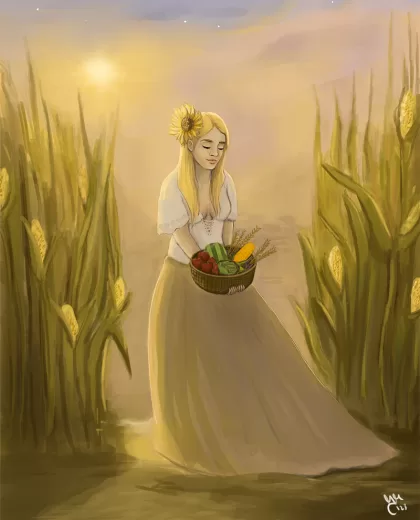
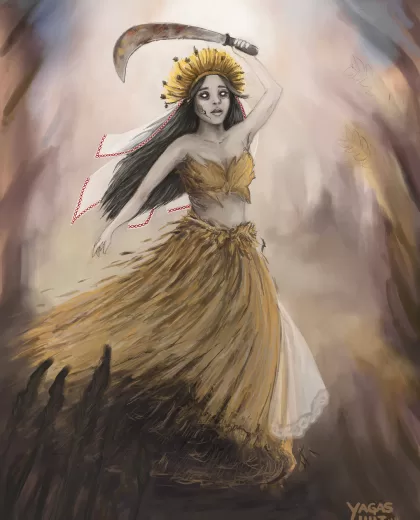
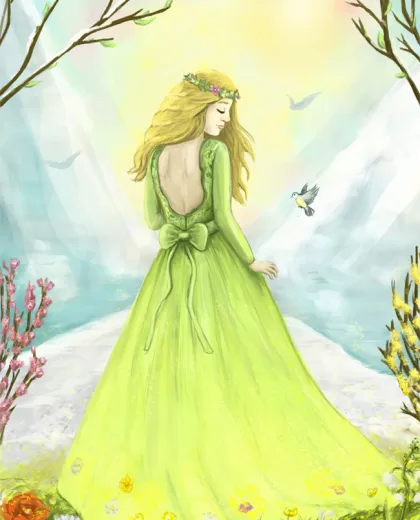
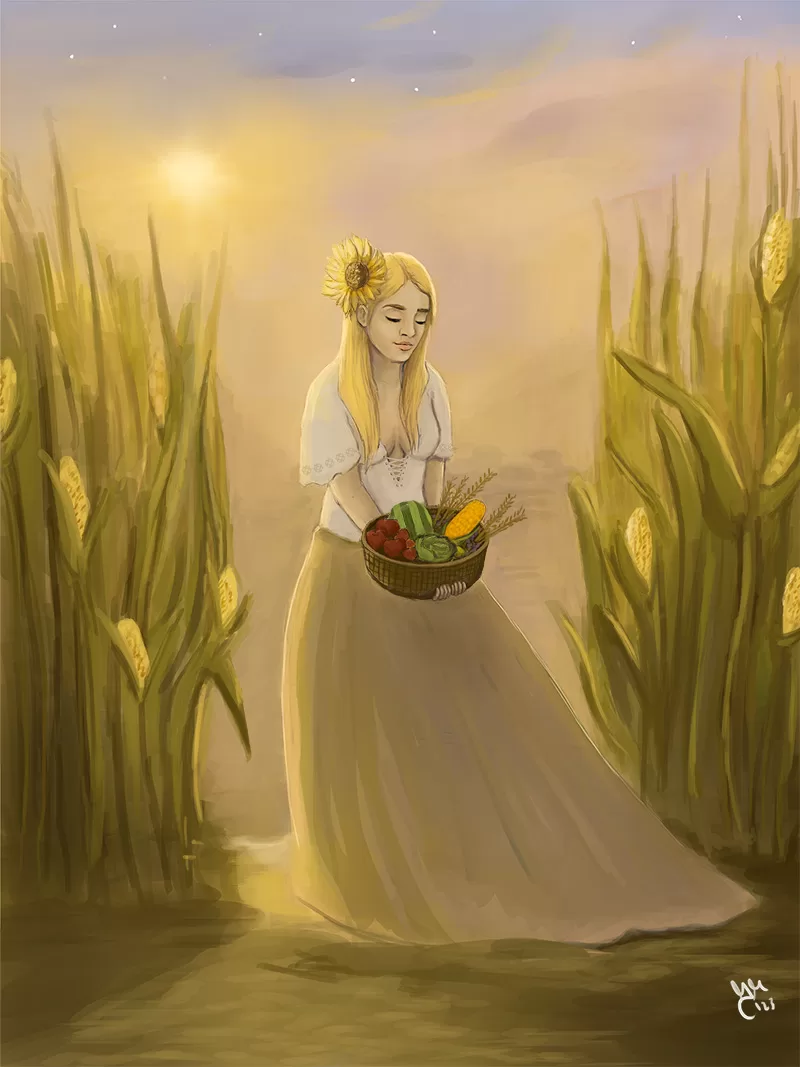
Lada is often imagined as a young woman crowned with flowers, dressed in garments woven from blossoms, grain, and summer leaves.
She belongs to the season of abundance. Spring has already awakened the world. Now the fields begin to ripen, the orchards fill with fruit, and the work of the year starts to bear its harvest.
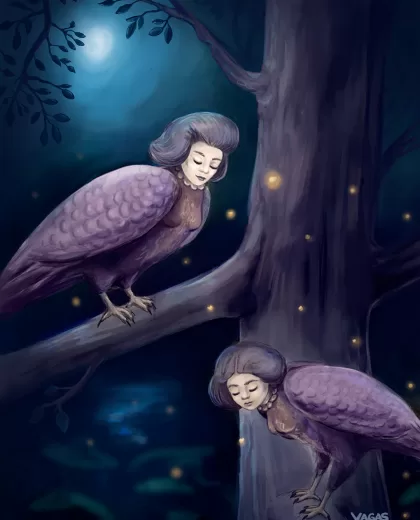
White swans are sometimes associated with her, as is the linden tree, long regarded throughout the Slavic world as a symbol of love, peace, and community. Lada is remembered for the harmony that allows people, households, and the natural world to flourish together.
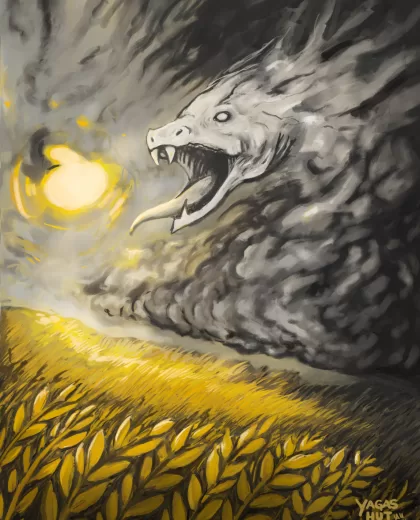
When fields turn golden and blossoms sway, Lada walks among them.
Harmony & Love
Lada is associated with unions, balance, and the quiet strength of togetherness. Her stories are not limited to the first excitement of love. They also belong to the bonds that deepen with time, the families built around them, and the communities held together through care and shared work.
She was believed to bless marriages, families, and the prosperity of the household.
Couples preparing for marriage called upon her name. Communities gathered in circle dances known as the kolo. Their unbroken movement reflected unity, balance, and the continuing cycle of life.
Where the kolo turns, Lada listens.
Kupala Night
Kupala Night, the great Slavic midsummer festival, celebrates love, fertility, fire, water, and the abundance of nature. Different regions connected the festival with different deities and folk figures, but many of its customs reflect the values traditionally associated with Lada.
Young women wove wreaths of herbs and wildflowers and set them afloat on rivers.
The direction of the current was believed to reveal something of the future. A wreath that floated freely promised good fortune. One that became caught or sank warned of waiting, disappointment, or hardship.
The river carries what the heart dares not ask aloud.

The Kupala Fires
Bonfires were lit at dusk, and couples leapt over the flames hand in hand. If they crossed without letting go, their bond was believed to remain strong throughout the year.
These midsummer fires are known in parts of the Slavic world as kresovi. Their name and solar symbolism are also connected with Kresnik, the hero whose battles against darkness reflect the strength of the summer sun.
Herbs gathered during Kupala Night were believed to possess unusual power.
Many searched for the mythical fern flower, said to bloom only on this night. Whoever found it might gain hidden knowledge, understand the language of animals, or discover treasures concealed beneath the earth.
On the shortest night of the year, magic lingers until dawn.

Rituals of Summer
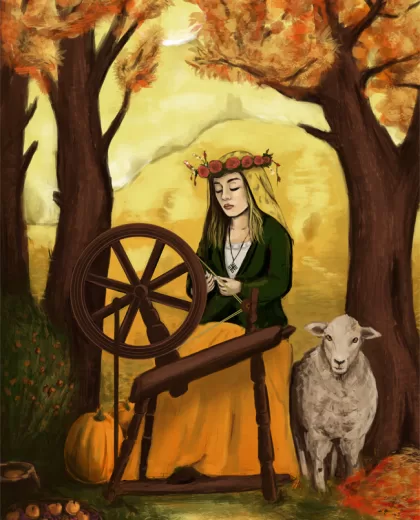
Summer was marked with wreaths of flowers and grain, songs sung at dusk, and offerings of honey, bread, fruit, and garlands. Together, they celebrated the abundance of the season.
Where Vesna welcomes the first blossoms of spring, Lada belongs to the season when those blossoms ripen into fruit.
Lada’s name survives in old Slavic songs, where refrains such as “Oj Lado, Lado” appear from the Adriatic to the Baltic.
Scholars continue to debate whether these refrains once invoked a goddess or developed as part of seasonal ritual songs. The songs leave the question open, carrying Lada’s name across regions even when its oldest meaning can no longer be recovered with certainty.
Sing her name at dusk, and the fields will bend in reply.
The Heart of Summer
Lada represents more than romantic love. She is remembered for the harmony that allows families, friendships, and communities to flourish, just as summer allows fields and forests to reach their fullest abundance.
Whether remembered as a goddess, a symbol, or an echo preserved in old songs, her name still belongs to the brightest days of the Slavic year.
Those who carry her grace sow warmth wherever they wander.