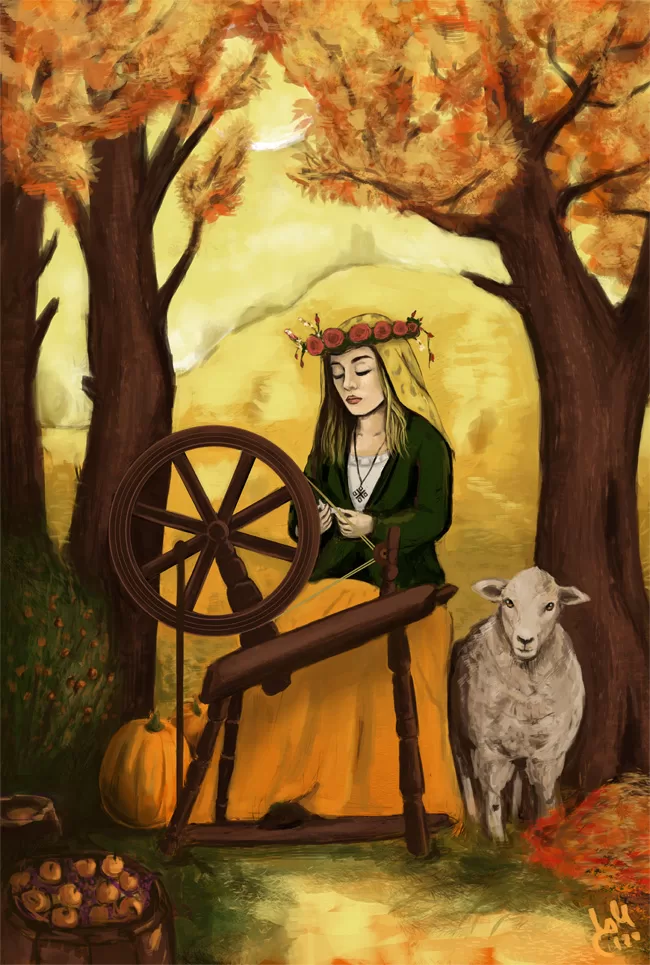


Mokosh is the moisture of the earth and the keeper of steady hands. Remembered most clearly in Eastern Slavic tradition, she watches over women’s work, fertility, and the abundance of the land.
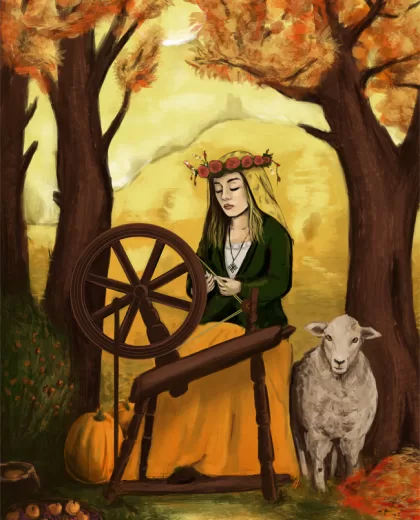
Spindle and loom, flock and field, all fall beneath her care. In the late autumn light, when wool is gathered and granaries are filled, her presence can be felt in the quiet satisfaction of work completed well.
Her name is often connected with an old Slavic word meaning “wet” or “moist”, linking her with fertile soil, gentle rain, and the life that water brings to the land.
In 980 CE, Mokosh stood among the gods of Prince Vladimir’s pantheon in Kyiv. She was the only goddess named there.
Appearance & Symbols
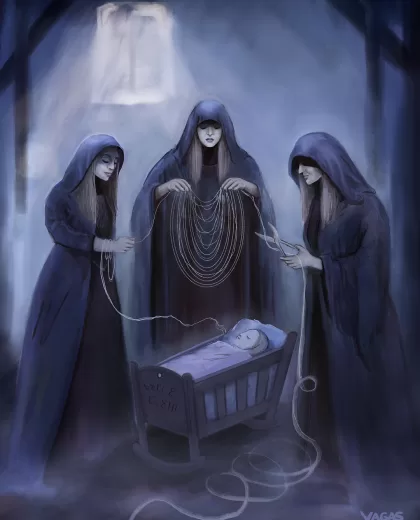
Mokosh is recognised by her spindle and distaff. Through these tools, fibre becomes thread and patient work becomes something lasting.
Wool and grain. Thread and harvest. Beneath her care, the work performed inside the home and the life growing beyond its walls belonged to the same cycle of abundance.
In old Slavic embroideries, she appears as a figure with a tall head and long outstretched arms, sometimes standing between horsemen or trees. Her image occupies the centre of the pattern, holding the world around her in balance.
Labours of Care & Craft
To spin is to turn fibre slowly into thread. The work cannot be rushed.
Mokosh watched over the everyday tasks that kept a household alive: spinning, weaving, washing, baking, and caring for livestock. Each task was repeated until separate acts of labour became a home.
Where Lada watched over harmony and love, Mokosh guarded the skills that allowed that harmony to endure from one day to the next. Beyond the house, Ovinnik watched over the threshing barn and the grain stored within it.
Threads spun with care hold a home together.
Harvest & Flocks
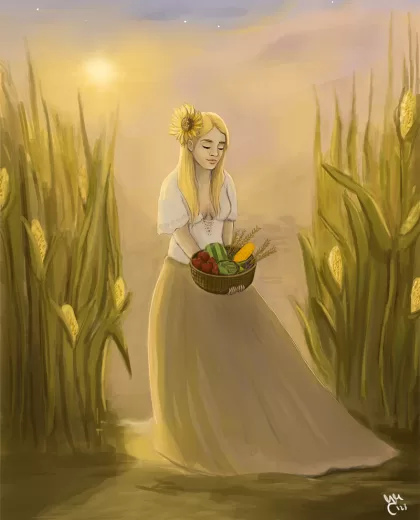
Mokosh’s care extended beyond the household. She was present in the fields, among the flocks, and wherever daily work became nourishment.
She was called upon to protect livestock, bring gentle rain, and carry abundance through the turning of the year.
Wool washed clean. Bread cooling on the table. Lanterns lit against the early dusk. These were the quiet signs of her favour.
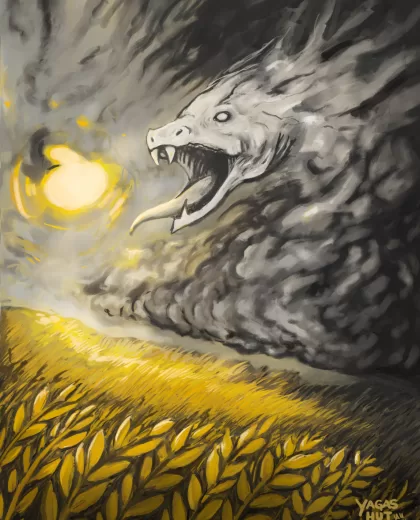
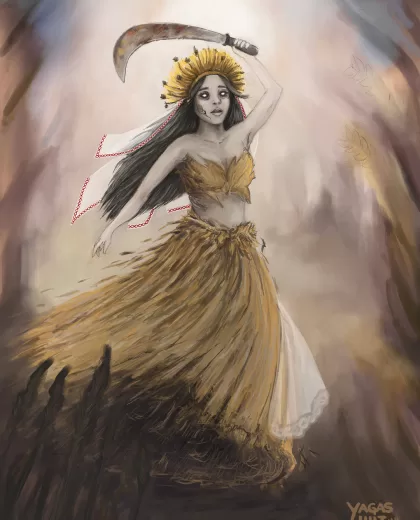
As a goddess of fertility and the earth, Mokosh watched over all that grew, ripened, and fed the community. Fields and flocks belonged to her as surely as the spindle and loom.
Where granaries are full and flocks prosper, Mokosh has passed.
The Goddess Who Became a Saint
When Christianity spread through the Slavic lands, Mokosh did not disappear entirely. Traces of her survived through the veneration of Saint Paraskeva Pyatnitsa, or Saint Friday, whom many scholars connect with older traditions associated with Mokosh.
Friday became tied to Saint Paraskeva, and customs surrounding spinning, weaving, and household work gathered around that day.
The boundary between pre-Christian belief and later folk tradition is difficult to trace. Still, Saint Paraskeva remains one of the clearest echoes of Mokosh in the Slavic world.
Under new names, the same threads are still spun.
Rites & Offerings
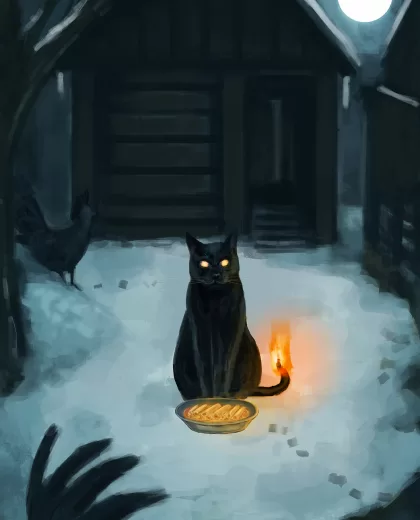
Offerings left for Mokosh were simple: bread, milk, wool, and the fruits of the earth.
They were not gifts of luxury. They came from the work that sustained the household and the land, returned in gratitude to the goddess believed to guard them both.
Leave a little for Mokosh, and there will be enough for all.
The Legacy of Mokosh
Mokosh is not remembered for great battles or sudden storms. Her strength lies in what endures.
Work returns with every morning. Fields bear fruit again. Hands repeat the same careful movements, season after season.
Every harvest begins long before the first grain appears.