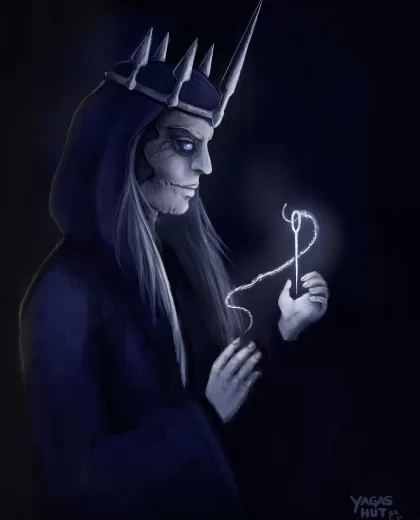


Morana is the Slavic goddess of winter, death, and the ending of the natural cycle. Her arrival marks the season when fields fall silent, rivers freeze, and the living world withdraws beneath the earth to wait for spring.
Known as Marzanna in Poland, Marena among the Eastern Slavs, and Morana throughout the South, she bears many names but the same purpose: to bring the endings that make new beginnings possible.
Appearance & Signs
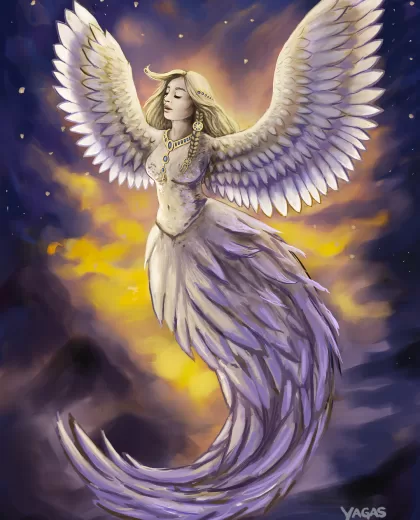
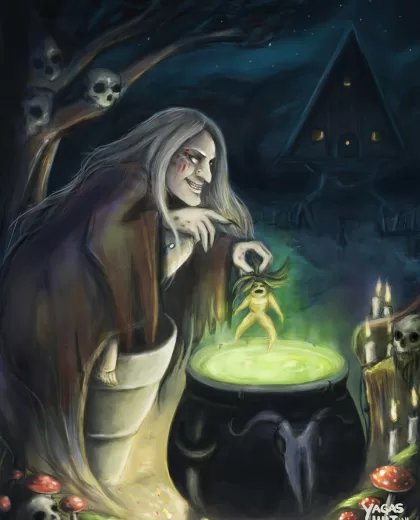
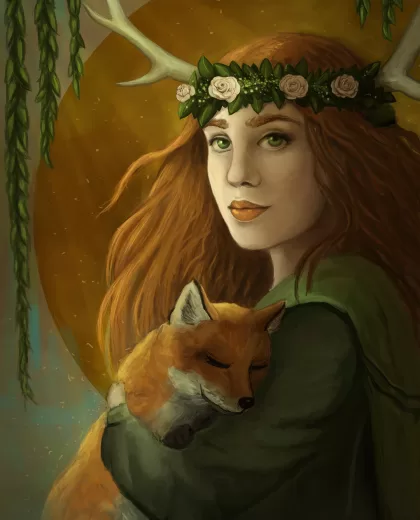
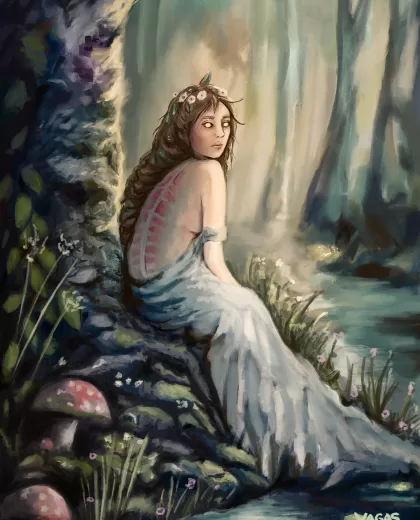
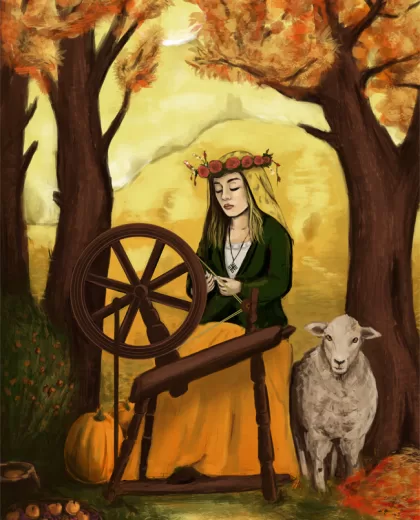
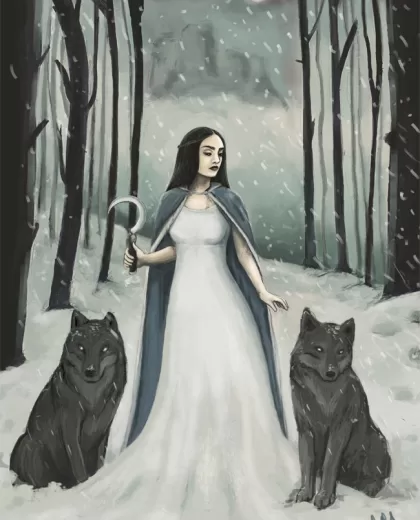
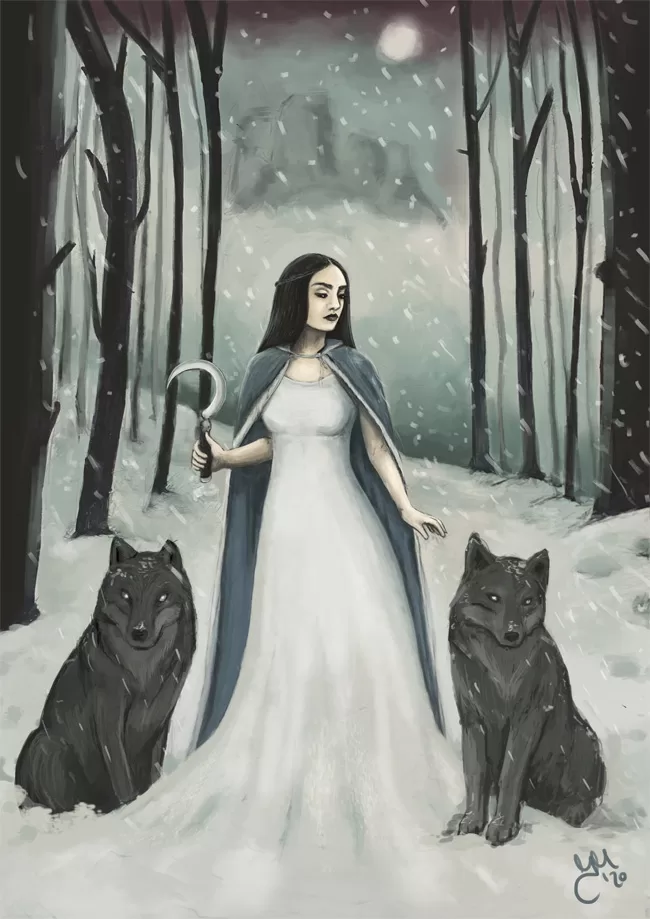
Morana is often imagined as a pale young woman dressed in white or dark winter clothing. In other traditions, she appears as an old and withered woman, reflecting the exhausted land at the end of the cold season.
She is recognised less by her face than by the world around her.
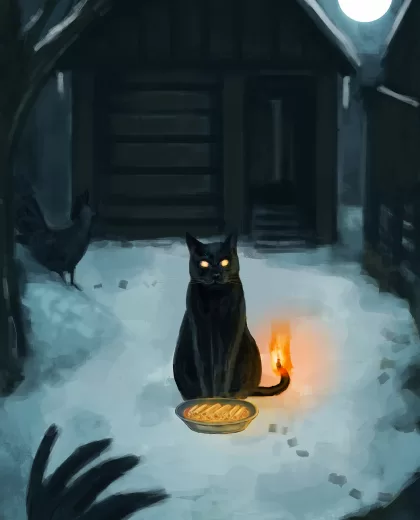
Frozen soil. Bare trees. Shortened days. The silence that settles over fields and forests beneath fresh snow.
When snow drifts without wind, Morana is walking.
The Legend of Morana and Jarilo
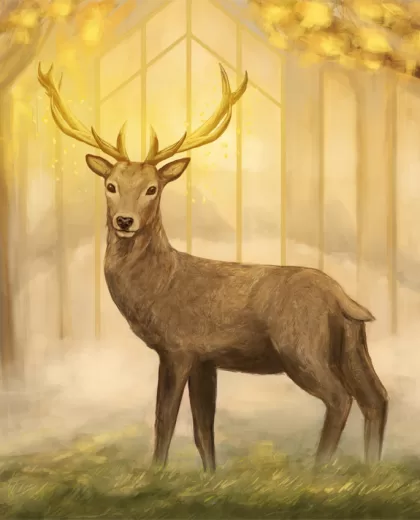
In reconstructed Slavic seasonal mythology, Morana is connected with Jarilo, the youthful god associated with spring, fertility, and the return of life. Their union reflects the flourishing of the land. Their separation marks the turning of the year.
According to later interpretations of the myth, Jarilo betrays Morana, and she kills him in anger.
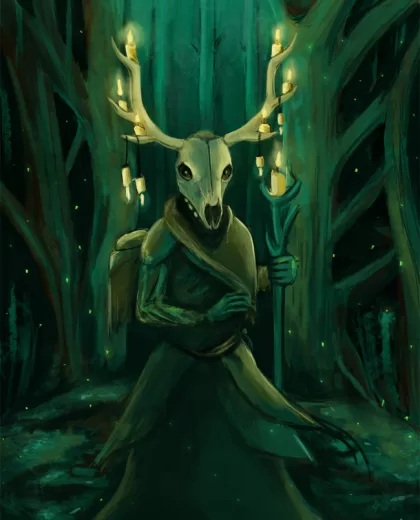
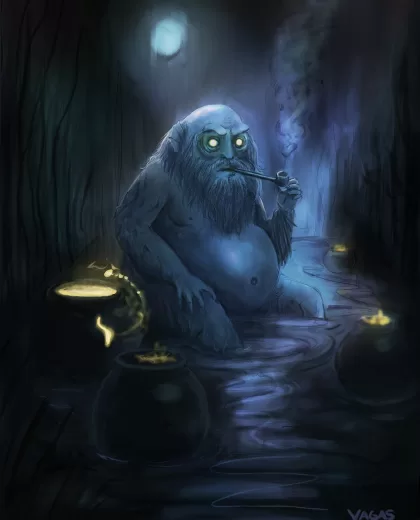
With his death, summer begins to fade. Morana returns to Nav, the realm of the dead, closely associated with Veles, where she remains until the cycle begins again.
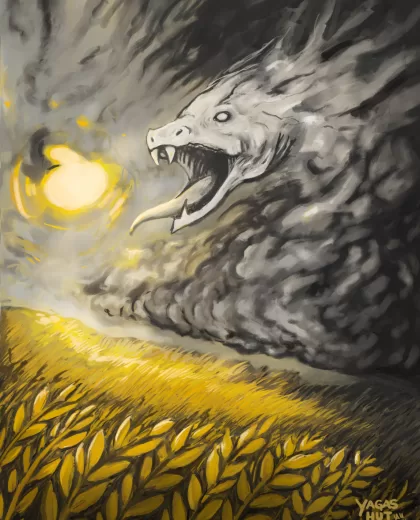
When Jarilo falls, the fields begin to fade.
Winter’s Grasp
Morana rules the coldest part of the year, when the soil hardens, rivers freeze, and crops sleep beneath the ground.
Winter under her rule is not simply destruction. It is the season in which the land rests and preserves what will later return.
For those who depended on the harvest, however, her season also brought fear. A winter that lasted too long meant hunger, illness, and death.
What winter takes, spring must earn.
Rituals of Farewell
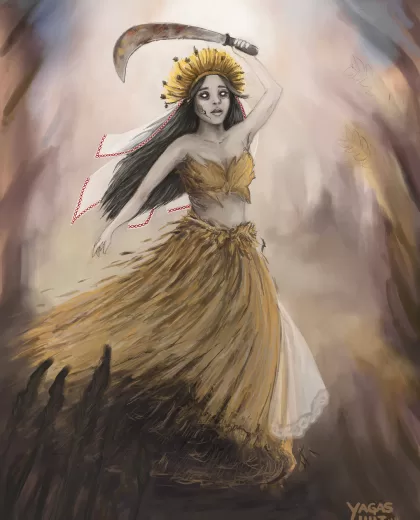
At the end of winter, communities across many Slavic regions created a straw effigy of Morana.
The figure was dressed in old clothing and carried through the village before being burned, drowned in a river, or, in some places, both.
The ritual marked winter's departure and welcomed the return of spring. Depending on the region, the effigy might be decorated with ribbons, eggshells, beads, or worn garments. In Poland, the custom survives as Marzanna Day, celebrated around the spring equinox.
Cast her to water, offer her to flame, and let the fields breathe again.
Omens of Morana
The ritual did not always end when the effigy disappeared beneath the water or into the flames.
In some traditions, everyone was expected to leave without looking back. Turning around could invite winter to follow them home.
Even stumbling on the walk back was considered a bad omen, suggesting that illness or hardship might still linger in the months ahead.
On the road home from her farewell, walk as if she watches.
Morana and Vesna
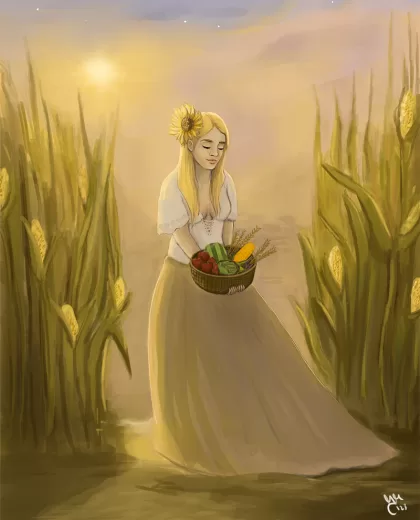
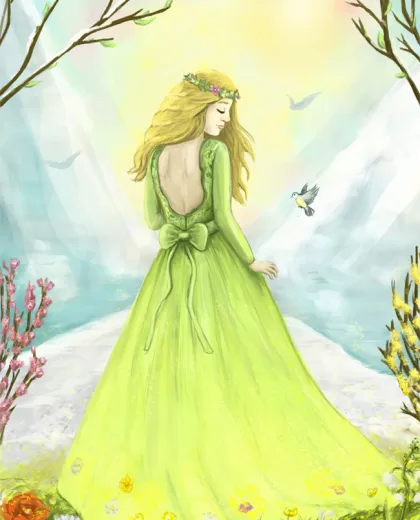
Morana is often paired with Vesna, the spirit or goddess of spring.
Morana belongs to winter, stillness, and death. Vesna brings warmth, growth, and new life.
No season lasts forever. As one comes to an end, another quietly begins.
Morana’s Place in Slavic Mythology
Morana was feared because her season brought cold, hunger, and death. Yet she was never simply a force of evil.
Her stories remind us that nothing blooms forever. Before spring returns, the land must first grow still.
Those who endure her shadow welcome the light more truly.