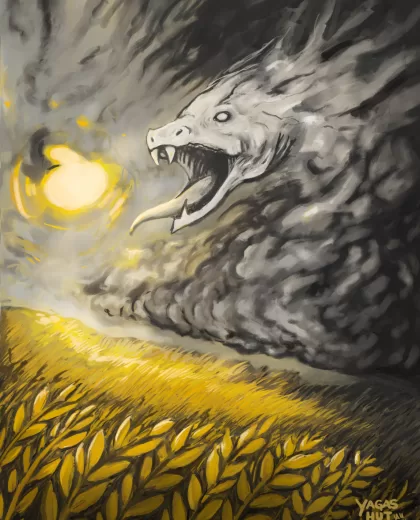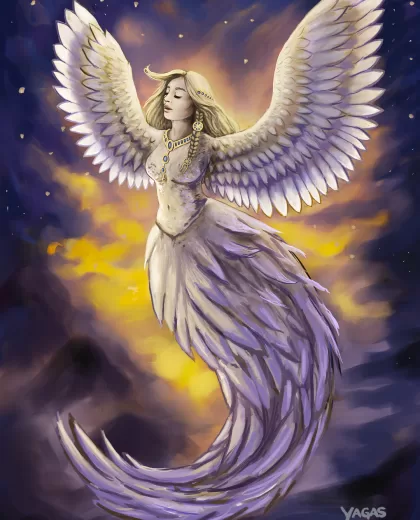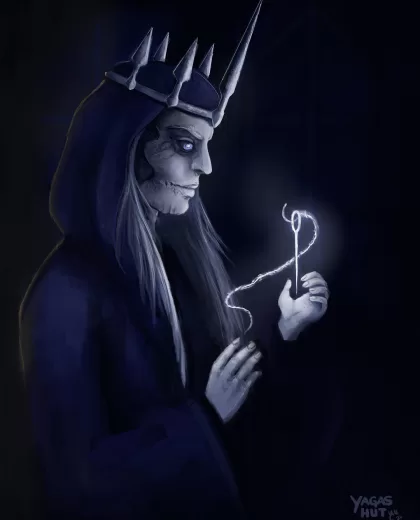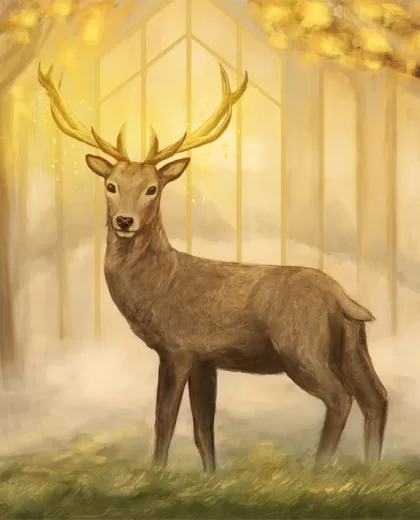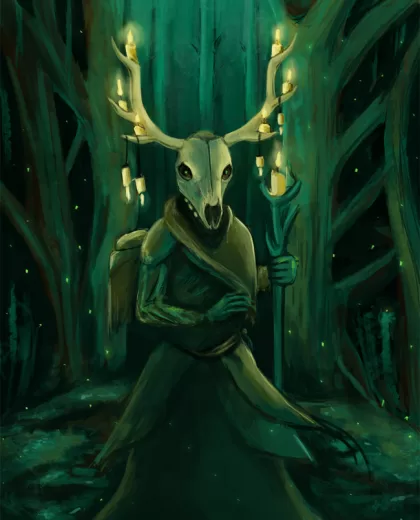


Poludnica, the Lady of Noon, is the spirit of the burning hour, walking the fields when the sun stands still. In Slavic folklore, she belongs to the moment when heat presses against the skull and the air refuses to move.
Farmers once feared the silence of noon, for it was said she crossed the wheat at that time, seeking those who would not rest.
She is remembered across Slavic lands under many names, from Poludnitsa to the Polish Południca and the Czech Polednice, yet always as the spirit of the dangerous midday hour.
She is the shape in the haze at the far end of the field, watching the worker who thinks he is alone. To the old workers, her name was never spoken between sunrise and dusk, only whispered at evening, when the danger had passed.
To see her is to feel the weight of the sun itself.
The Hour of Stillness
At midday, the world falls still. Birds quiet. Shadows vanish beneath the feet. Even the wind retreats.
Those who continue working under the blazing sky risk her attention. She does not strike without warning.
Poludnica walks the fields when the land is stripped of motion.
The Dance
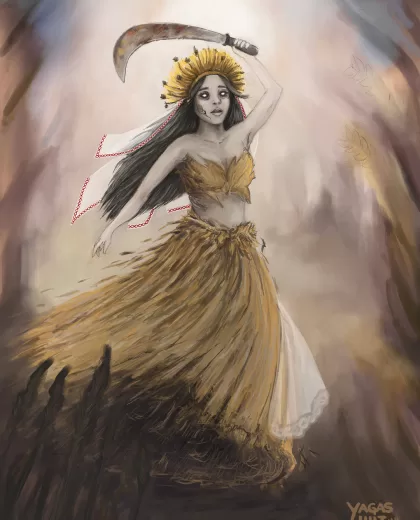
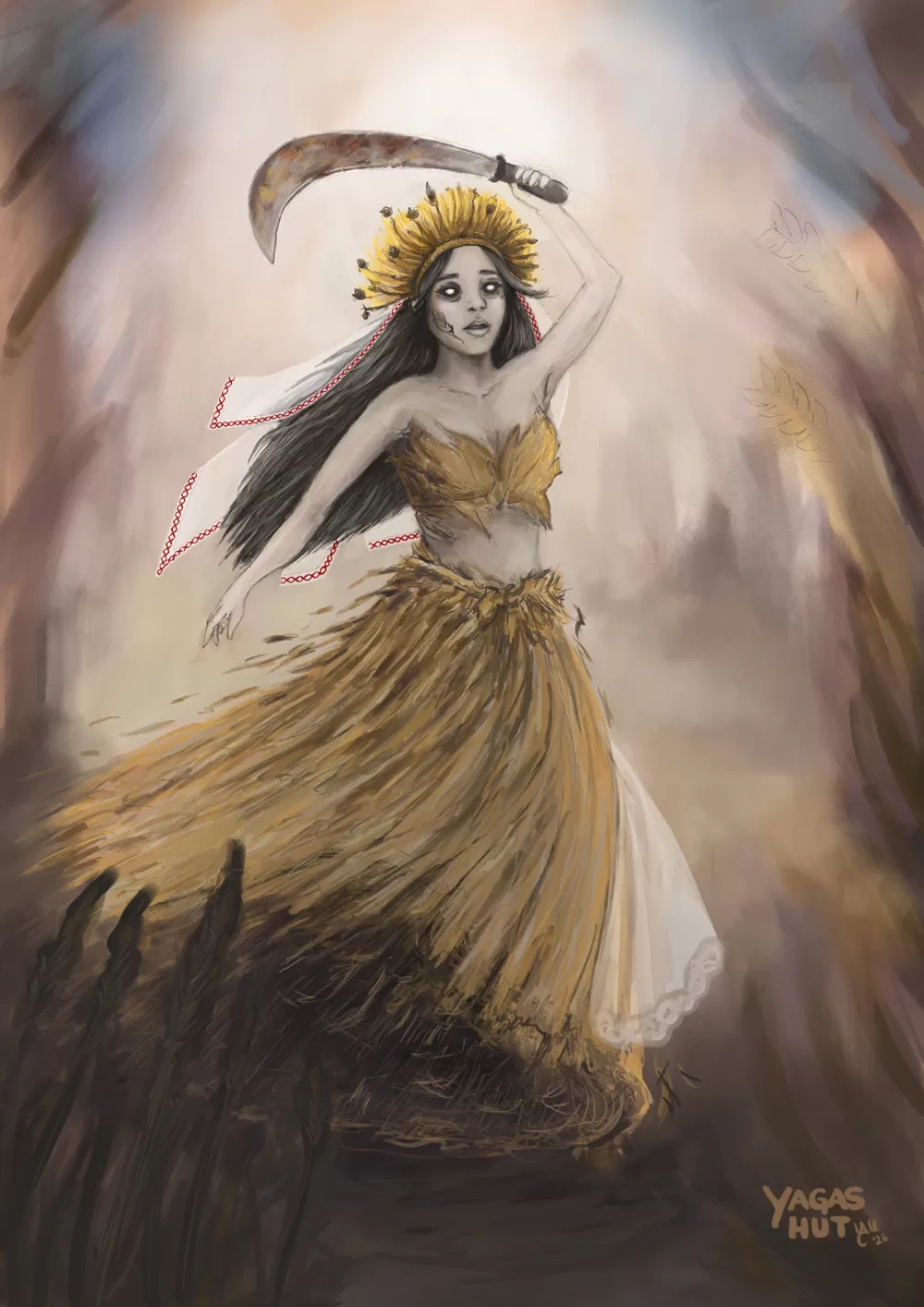
When Poludnica finds a lone worker beneath the open sun, she begins to dance. The movement is slow at first, almost tender, her feet brushing the wheat as if the land itself were breathing. Those who watch feel compelled to follow.
To refuse is impossible. To stop is worse.
The dance grows faster as the sun burns higher. Heat thickens the air, yet her steps never falter. Those who dance with her must continue until the light weakens or their strength fails.
In these stories, Poludnica becomes the rhythm of the unforgiving sun, trapping the living in motion beneath a sky that offers no mercy.
Many are said to collapse before evening, smiling as if they had forgotten they were mortal.
The Questions
Other tales speak of her voice rather than her feet. She halts travelers with riddles, forcing them to answer while the heat thickens around their thoughts. Each question is simple. Each answer slips further away the longer the sun stands overhead.
She never needs to raise a hand. Few can endure the hour.
In every version, the law is the same: the hour must be respected.
She is discipline disguised as myth.
Appearance
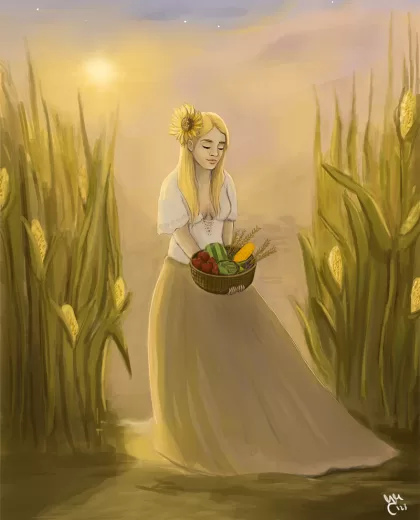
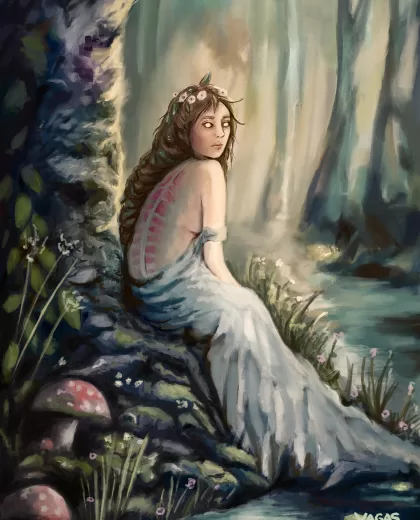
Poludnica is seen as a woman of wheat and light. Her dress moves like dry grass in wind that no one else can feel. Some describe her hair as pale and brittle, others as dark and heavy as soil. In every telling, her eyes are wrong, too bright, too empty, or too knowing.
To meet her gaze is to feel the field watching back.
Some say Poludnica was once a woman who refused to leave the field. She worked too long beneath the noon sun and never returned home. The wheat closed over her, the air grew still, and she could no longer remember how to rest.
But the hour remembered.
Now she walks where others fall, carrying the echo of every worker who mistook endurance for strength.
The Price of Endurance
Poludnica is a boundary, a warning written into the land. She reminds the living that the sun is not gentle, and that every mortal has limits the world will not forgive.
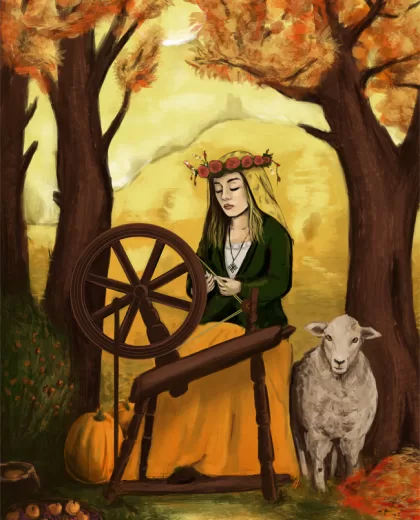
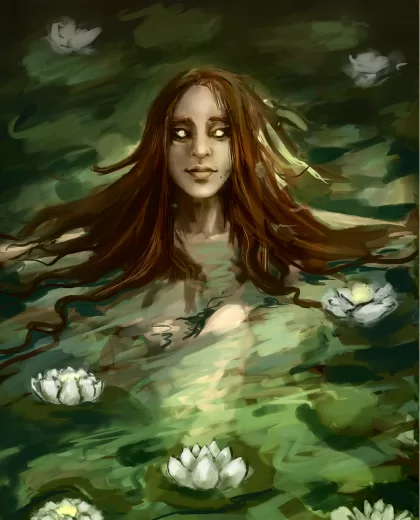
The same caution walks the old lands in other forms. The Rusalka waits at the water’s edge, drawing the unwary in; Poludnica waits in the field, beneath the merciless sun. The field-mother Mokosh blesses the harvest, while Poludnica keeps the hour when the field must be left alone.
Parents once called their children home at noon in her name. Workers laid down their tools because they respected the hour.
Endurance has a cost.
The body always answers the hour.